
• Travel to India with Karni
  • Rajasthan Based India Tour Operator
  • Approved By Ministry of Tourism, Government of India
4.8
4.9

Navratri Festival Itinerary

Expand All +
  • icon
    Ahmedabad – Patan – Vadodara – Surat - Navratri
    • Welcome to Ahmedabad, you will be met by our team member at the exit gate of the airport.
    • Once you are in the car, you will first head to the hotel for a smooth check in and freshening up.
    • Among the places of interest is Kochrab, Ashram, which was Gandhi’s first Ashram set up in the year 1915. It was the foundation to impart training in Satyagraha, self-sufficiency, Swadeshi and more. Two years later, it had to shut due to a plague epidemic. Thereafter, he set up his Ashram on the banks of the Sabarmati, also known as the Harijan Ashram. It served as one of the pivotal places in the struggle for independence. It was from here that Gandhi launched the famous Dandi march against the British Salt law. Towards the evening, you will be taken to the Kankaria Lake.
    • You will also be taken to see the famous Adalaj stepwell in a quiet village. The stepwell was built in 1499 by Rani Rudabai, the wife of a Vaghela Chief, Veersinh. It served as the watering hole for several pilgrims and caravans that moved along these trade routes. Followed by a visit to Sarkhej Roza, a mosque that has been an important center for Sufi Islam.
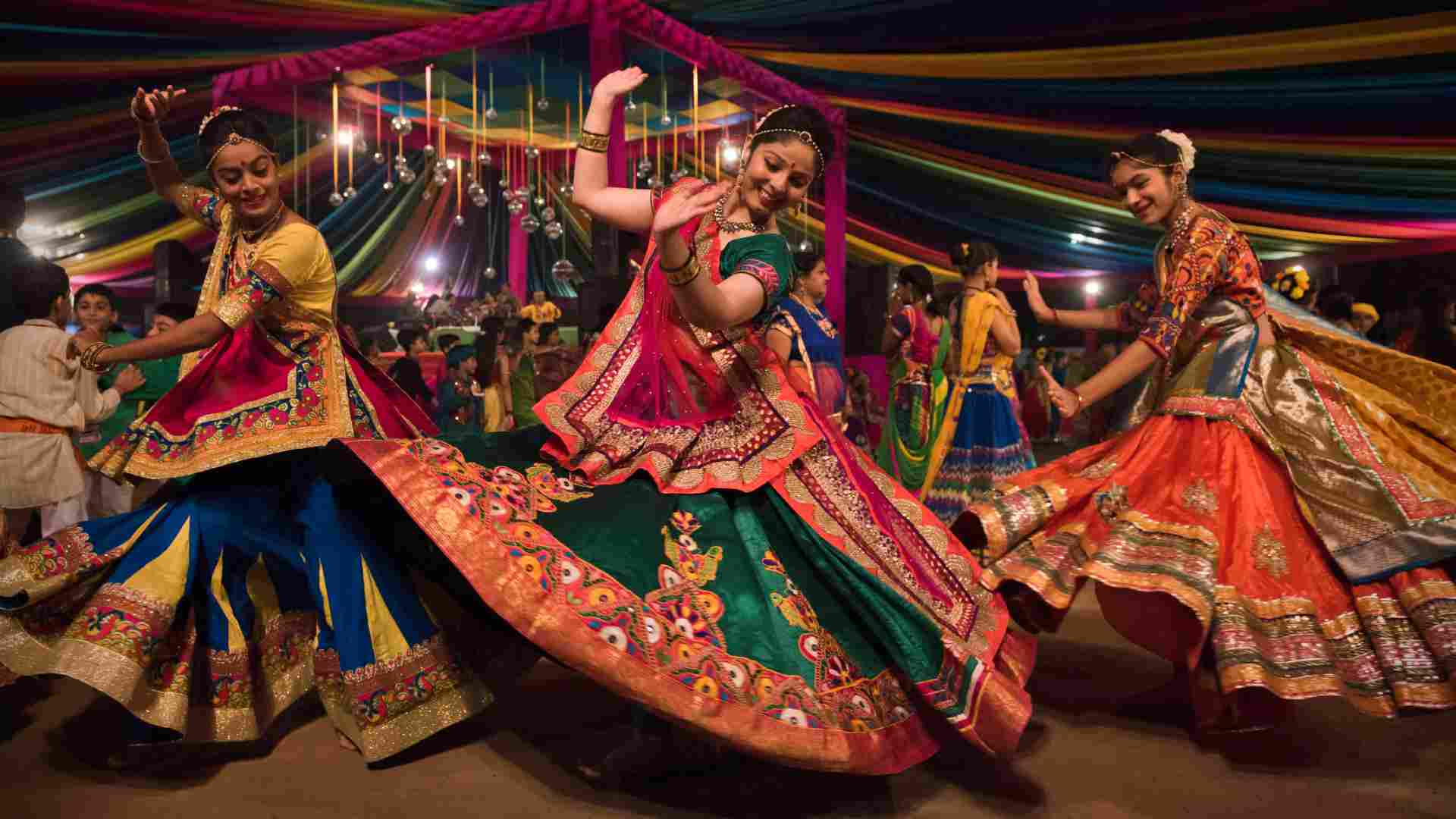
    • In the evening, you will go experience the vibrancy and buzz that makes Navratri unique in Gujarat. Many places turn into all night dancing grounds with colours and music adding to the festivity.
    • After all the excitement, you will return to the hotel for the night.
    (Road Trip of 150 km, covered in 3 hours)
    • Post breakfast, you will head to Patan.
    • On the way, you will go see the Rani ki vav or the Queen’s stepwell. This richly sculptured monument was built by Udaymati in memory of her husband Bhima I (1022 – 1063).
    • After this, you will take a drive to the ancient fortified city of Patan. It is 150 km away and will be covered in 3 hours. Patan is famous for the Patola weaving, considered to be the finest hand woven sarees. A normal saree takes 4 to 6 months to finish, which makes it a dying art in today’s fast paced world.
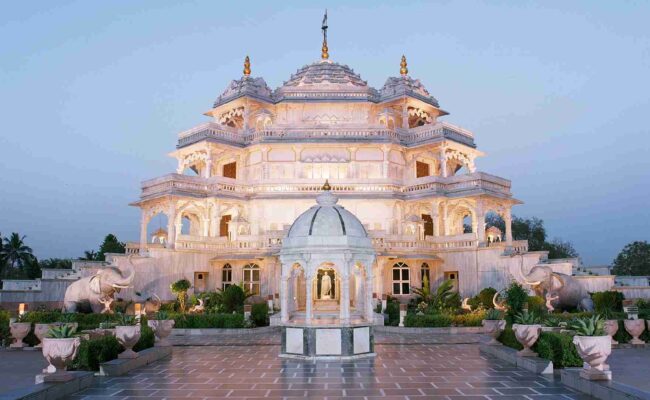
    • On your return, you will visit the famous Akshardham temple in Ahmedabad, it was opened in1992 as a tribute to Bhagwan Swaminarayan and the avatars, devas and sages of Hinduism.
    • After this trip down memory lane, you will be taken to participate in the festivities of the Navratri, in the gush of colours, beats of music and hordes of people celebrating.
    • After which, you would return to the hotel for the night.
    (Road trip – 120 km, covered in 2 hours)
    • Post breakfast, you will be checked out and on your way to Vadodara.
    • In Vadodara, you will be checked in and after you freshen up, you will be taken to visit the lovely Laxmi Vilas Palace, an exemplary example of Indo-Saracenic tradition. Inside the palace grounds is Sayajirao’s personal museum. Then you will be taken to Kirti Mandir, it serves as a memorial to the many deceased members of the Gaekwad family.
    • Towards the evening, you would get to experience Vadodara transform into a festive mood where people will put on the most colourful garbs, wear the most exquisite jewelry as they head out for Garba and Dandiya Raas.
    • After the thrill, you will return to the hotel for the night.
    • Once you are done with breakfast, you will be taken to see the remaining gems of Vadodara. The M.S. University, being one of the attractions. This university dates back to 1881, when it was known as the Baroda College. The campus has several historic buildings and museums, some reflect the Indo-Saracenic style of architecture.
    • After that, you will visit Hazira Maqbara where the grave of Qutb-ud-din Muhammad Khan can be seen. He was the tutor to Salim, Emperor Akbar’s son. It is built on a higher octagonal platform with smaller gates on the cardinal directions and 5 arches on each side, making it very similar to the Mughal tombs in Delhi.
    • In the evening, you will get another chance to join the Navratri celebrations with Dandiya and Garba.
    • After all the fun, you can head back to the hotel for the night.
    (Road trip – 150 km, covered in 3 hours)
    • After breakfast, you will be checked out and on your way to Surat, the second largest city of Gujarat and a major industrial hub for India. The city finds mention in the Mahabharata, then in the 13 th century, it was known as Suryapur. In the 16 th century, it became a prominent port for the European traders.
    • Once in Surat, you will be checked into the hotel where you can freshen up.
    • Thereafter, you will be taken to see the Dutch Cemetery, where tombstones are indicator to the rich European trade and the large number of Europeans who left their country to expand their trade, empire into India.
    • The Surat Fort is another place of interest, built by Sultan Muhammad Tughlak in 1540, to protect the city from the European raiders. It is located by the river Tapti. It gives you a glimpse into the past where the city needed fortification and the structure was planned to enhance that aspect of everyday life, plus the architectural ingenuity of the 14 th century.
    • In the evening, you can join the festivity and the fervor of the people as they celebrate Navratri in the Surat way.
    • After all the dancing and merriment, you can head back to the hotel for the night.
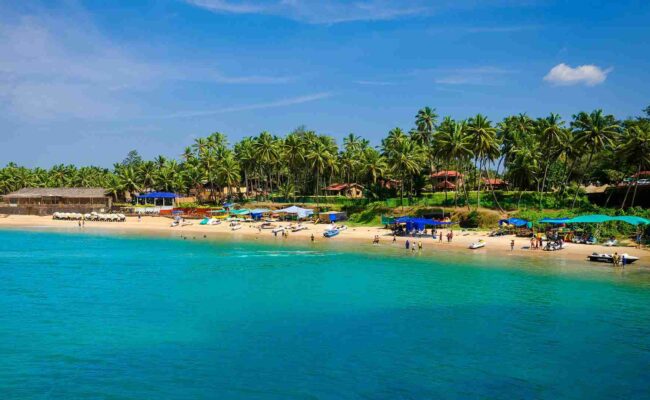
    • After breakfast, you will head back into town for more sightseeing, visit the closer Daman and the gorgeous Hajira beach, and spend the day frolicking by the seaside, while taking a chance with the local street food being sold there.
    • In the evening, you can enjoy the local festivity with the people in the festive mood.
    • After that, you will head back to the hotel for a restful sleep.
    • Once you are done with breakfast, you will head to Ahmedabad to take your train or plane back home.

Itinerary Destination Map

Places include in above Itinerary

Frequently Asked & Question

The Golden Triangle Tour is a famous travel circuit connecting three historic cities: Delhi, Agra, and Jaipur. It forms a triangular route on the map and offers a mix of Mughal, Rajput, and modern Indian culture.

The best time is October to March when the weather is cooler and comfortable for sightseeing.

Avoid May–June due to extreme summer heat.

Yes, the route is one of the safest and most tourist-friendly in India. Millions of international travelers visit these cities every year.

Basic travel precautions are recommended.

Yes. Many travelers extend the tour with destinations like:

  • Udaipur

  • Ranthambore National Park

  • Varanasi

  • Kerala

Hiring a local guide in major monuments like Taj Mahal or Amber Fort is recommended to understand the history and architecture.

Yes. The tour is perfect for first-time travelers because it covers India’s most famous landmarks, culture, cuisine, and history in one trip.

Customer Review & Rating

Good

0 based on 0 reviews

Overall 0.0
Car / Coach 0.0
Driver 0.0
Hotels 0.0
Destinations 0.0
  • No reviews yet. Be the first to write one!
  • Your Safety is Our Top Priority.
shape-image