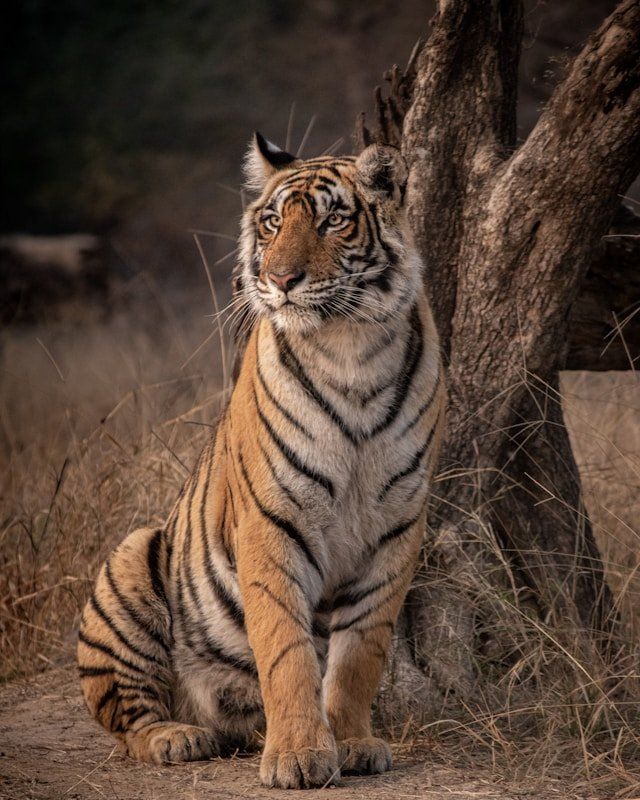
A Bandhavgarh National Park tour is the one we suggest when a guest tells us, plainly, that seeing a wild tiger matters more than anything else on the trip. The park in Madhya Pradesh is small, its core is compact and its tigers have been watched, named and followed by naturalists for decades. Nothing in the jungle is guaranteed, but the odds here are as good as anywhere we send people. This article walks through the five days we actually plan around it, with the real drive times from our tour sheets, and is honest about where the trip is hard.
We have run tours from our Jaipur office since 2005, and the central Indian parks sit inside our longer wildlife tours of India rather than as a quick add-on. That is deliberate. Bandhavgarh is not on the way to anywhere, and it rewards people who give it time.
Why Bandhavgarh for a tiger safari
For centuries the forest around the old hill fort was the hunting ground of the Maharajas of Rewa. It became a national park in 1968, starting with about 105 square kilometres, and joined Project Tiger in 1993. The first white tiger recorded in the region, Mohan, was captured here by the Maharaja of Rewa in 1951 — our tour sheet adds, truthfully, that nobody has seen a white tiger in the wild here for about fifty years, so please don't come for that.
What you come for is the density. Bandhavgarh holds a lot of tigers in a modest area, and the sal forest opens into grassy meadows where a cat crossing a track is easy to see. Madhya Pradesh as a whole counted 785 tigers in the 2022 national estimate, the highest of any state. The park's best-known male of the 1990s, Charger, was named for his habit of charging vehicles and elephants; his son B2 was the dominant male in the mid-2000s. Guides still talk about both, and you will hear the names of their descendants on your drives.
The core is split into three zones: Tala, Magadhi and Khitauli. Tala is the classic one, with the fort and the meadows below it, and its permits go first. Magadhi and Khitauli are quieter, with fewer jeeps at each sighting. Buffer zones such as Panpatha, Dhamokhar and Johila are used when the core is full. Our Bandhavgarh destination page has more on the landscape and the other wildlife — leopard, sloth bear, gaur, dhole and a long bird list.
A five-day Bandhavgarh National Park tour, day by day
This is the central-India section of our 18-night wildlife itinerary, which reaches Bandhavgarh after Ranthambore, Keoladeo, Agra and Orchha. You can lift it out and run it on its own from Khajuraho, which has direct flights from Delhi in the winter season.
Day 1 — Khajuraho temples
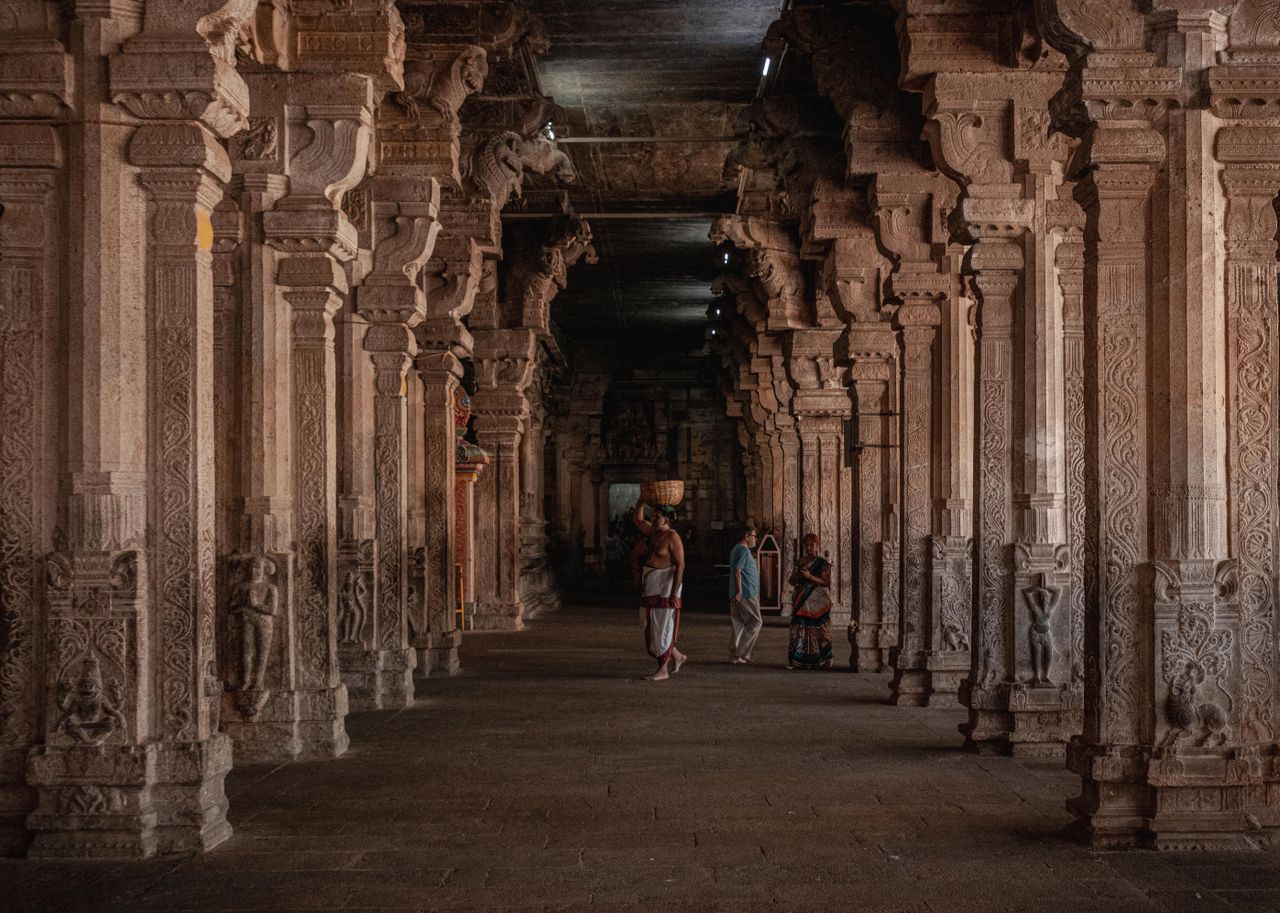
In the full tour you arrive from Orchha (185 km, about three and a half hours on our sheet) and spend the afternoon on the Western Group of temples, including the Kandariya Mahadev. If you fly in, you get the same afternoon. The Khajuraho temples are a UNESCO site and an easy, unhurried first stop before the early mornings start.
Day 2 — Khajuraho to Bandhavgarh
Our tour sheet gives this as 250 km, about 5 hours. Map tools put the park between roughly 225 and 280 km away depending on which lodge you are heading to, so five to six hours is honest. Leave after breakfast, arrive at your lodge near the Tala gate in the afternoon and do nothing else. You will be up before dawn tomorrow.
Days 3 and 4 — four drives in the park
Each day starts with a 6.00 departure for the morning drive, back to the lodge for a late breakfast, a rest through the middle of the day, then out again after lunch for the afternoon drive. That is four drives over two days. Morning drives run about three and a half to four hours and are usually the better ones: cooler, with tigers still moving along the tracks.
We'd suggest spreading those four drives across at least two zones — say two in Tala and two in Magadhi or Khitauli. If one zone has a quiet spell, you are not stuck in it, and you see more of the park.
Day 5 — Bandhavgarh to Kanha
Our sheet gives 220 km, about 5 hours to Kanha National Park. Kanha is larger and more open, with meadows and the hardground barasingha, a swamp deer found almost nowhere else. After two days of drives there, the tour continues 170 km, about 4 hours to Jabalpur airport for the flight back to Delhi.
What makes this harder than Ranthambore
The honest drawback is distance. Ranthambore is a train ride or a few hours' drive from Jaipur; Bandhavgarh is not. The nearest airport, Jabalpur, is roughly 170–200 km away, the nearest railway station, Umaria, about 32 km, and Khajuraho about five hours by road. Delhi–Jabalpur is a direct IndiGo flight of around an hour and a half, but schedules change. Counting the flight from London — roughly 8.5 to 10.5 hours non-stop to Delhi depending on the airline — you need a day and a half each way just to get here. If you only have a week in India, we would not try it; read Ranthambore vs Sariska instead and stay closer to Rajasthan.
We also advise against a single night. One afternoon and one morning drive is two chances, and two chances is not enough for a park you have spent two days reaching.
Permits are the other hurdle. Core-zone safaris are booked online through the Madhya Pradesh forest department, foreign guests need their passport details on the booking and must carry the passport at the gate, and each open jeep takes up to six people with a guide. Tala permits in peak months can go within minutes of opening. This is where a local operator earns its fee — we book the permits, the jeep and the naturalist as soon as your dates are firm.
Finally, Madhya Pradesh parks close one session a week for rest (Wednesday afternoon at the time of writing), so we plan the drives around it.
When to go
The core zones open in October and close for the monsoon at the end of June. Each season has a trade-off:
- October–November: green forest, fewer visitors, tigers harder to spot in tall grass.
- December–February: pleasant days but genuinely cold mornings — close to freezing in open jeeps. Bring gloves, a hat and a proper layer; our India packing guide covers it.
- March–June: the best tiger viewing as water shrinks and cats come to the pools, but April–May afternoons pass 40°C and can approach 45°C.
For a first visit we'd pick late February to March: the cold has eased, the grass has thinned and the heat has not yet arrived.
Who drives you, and why it matters here
Between the parks you are in a private car with one of our drivers for long days on rural roads — that is the bulk of the non-safari time on this route. Guests tend to remember the drivers as much as the tigers. Rainer wrote on TripAdvisor in May 2026: "My driver, Mohan, was great. He was extremely careful and responsible." That steadiness matters most on a five-hour run through central India with an early start the next morning. You can read more guest accounts on our reviews page (4.8 from 303 reviews on TripAdvisor and Google), and our car and driver service page explains the vehicles we use. If you are deciding between parks in other regions, our Jim Corbett guide covers the northern option.
Frequently asked questions
Is a tiger sighting guaranteed at Bandhavgarh?
No. No honest operator can promise one. Bandhavgarh gives some of the best odds in India, and four drives across two zones improve them, but some guests have quiet days.
How many nights should we spend in Bandhavgarh?
At least three, which gives you four drives. If tigers are the main reason for your trip, a fourth night is well spent.
Can we combine Bandhavgarh with the Golden Triangle?
Yes, usually via Khajuraho or a flight to Jabalpur after Agra, but it adds about four days. It suits trips of two weeks or more.
Is Bandhavgarh suitable for children?
Older children who can sit quietly for three or four hours usually love it. Tell us their ages when you enquire and we will pace the drives around them.
If you would like this five-day section built into your own dates, with permits booked as early as possible, send us your travel dates and we will plan your Bandhavgarh safari.