Thirty kilometres south of Bikaner, where the Jodhpur highway runs straight through flat scrub country, there is a village called Deshnoke. Most people who stop here have come for one reason: to stand barefoot on a marble floor while several thousand rats move around their feet. The Karni Mata temple is the only place in India where we brief our guests twice — once about what they will see, and once about how to behave while seeing it.
We have been bringing travellers here since 2005, usually as a morning stop on the drive out of Bikaner. It divides people. Some walk out after four minutes. Others stay an hour and talk about it for the rest of the trip. This guide is written so you can decide which you are likely to be before you commit to the detour.
What the temple actually is
Karni Mata was a fourteenth-century ascetic of the Charan community, regarded by her followers as an incarnation of the warrior goddess Durga. The rulers of Bikaner and Jodhpur treated her as their tutelary deity — she is said to have laid the foundation stones of both forts. The temple at Deshnoke stands on the site where, according to tradition, she disappeared rather than died.
The rats are the part everyone knows. They are called kabbas, and the belief is that they are the reincarnated souls of Karni Mata's Charan descendants, waiting in this form before returning as humans. The temple houses roughly 25,000 of them. They are fed, protected and treated as family, which is why the courtyard holds large communal bowls of milk and grain that visitors are welcome to contribute to.
If you spot a white kabba among the brown ones, tradition holds that it is a manifestation of Karni Mata herself and a considerable blessing. There are only a handful. We have had guests wait forty minutes and leave disappointed, and others walk in and see one straight away.
The building deserves your attention too
It is easy to spend an entire visit looking at the floor. Look up as well. The marble facade and the solid silver doors were the gift of Maharaja Ganga Singh of Bikaner in the early twentieth century, and they are genuinely fine work. The silver panels carry episodes from the goddess's life, and there is a second set of silver gates inside, added later by devotees. The heavy marble screens, the carved brackets, the sheer scale of it — this is a temple that received serious royal patronage, not a curiosity that grew by accident.
There is also a small museum in the complex. Entry is two rupees, it takes ten minutes, and it gives useful context on the Charan community and the temple's history.
What a visit is actually like
Before you go in
- Shoes come off outside, as at any Indian temple. There are no exceptions here, and this is the part that stops some people. We tell every guest to wear socks, and thick ones. Nobody has ever regretted this; several have regretted not doing it.
- Entry is free. There is a small charge for still and video cameras, payable at the counter. Phones are generally fine, but ask rather than assume.
- The floor is washed constantly and there is a distinct smell. In the cooler months it is mild. In May and June it is stronger.
Inside
Walk with a shuffle rather than a stride. The kabbas move fast and low, and the one thing you must not do is step on one; it is a serious matter here and traditionally calls for an act of atonement. Shuffling means you nudge a rat aside rather than tread on it. If one runs across your foot, that is considered lucky. They will not climb your legs.
The inner sanctum holds the image of Karni Mata, garlanded and dressed. Around the courtyard you will see families who have travelled a long way to be here, priests conducting rituals, and prasad being handed out. This is a working temple, not an attraction. Photograph the architecture and the courtyard freely; be quiet and careful around people at prayer.
One thing worth knowing in advance: prasad here has often been nibbled by the kabbas first, which is precisely what makes it holy. Accepting it graciously and passing it on is entirely acceptable if you would rather not eat it.
When to go
Time of day matters more than most guides admit. The temple is open from around 4am to 10pm. Come between 5 and 7 in the morning: the kabbas are most active after the morning feed, the marble is cool underfoot, the light on the silver doors is at its best, and the crowds have not arrived. The Mangla Aarti at 4am is a genuine experience if you are willing to leave Bikaner in the dark. The evening aarti at sunset is the other good window.
Time of year: October to March is the sensible season for this whole region, as it is for the rest of Rajasthan. From April the desert heat builds quickly, and by May a barefoot midday visit is genuinely unpleasant.
The temple holds two large fairs a year, during the Navratri festivals in roughly March–April and September–October. The dates move with the lunar calendar, so confirm them for your travel year rather than trusting a fixed date. Fair days are extraordinary and extremely crowded, with tens of thousands of pilgrims walking in from surrounding villages. If you want the atmosphere, come then. If you want to see the temple properly, do not.
How we build Deshnoke into a trip
Deshnoke sits on the road between Bikaner and Jodhpur, which makes the logistics straightforward. The way we normally run it:
- A full day in Bikaner: Junagarh Fort in the morning, one of the few major Rajasthani forts never taken by an enemy, then the camel research farm in the late afternoon.
- The next morning: leave the hotel by 7am, reach Deshnoke in about 45 minutes, spend an hour, then carry on south. Bikaner to Jodhpur is roughly 250 km and takes about five hours including the temple stop.
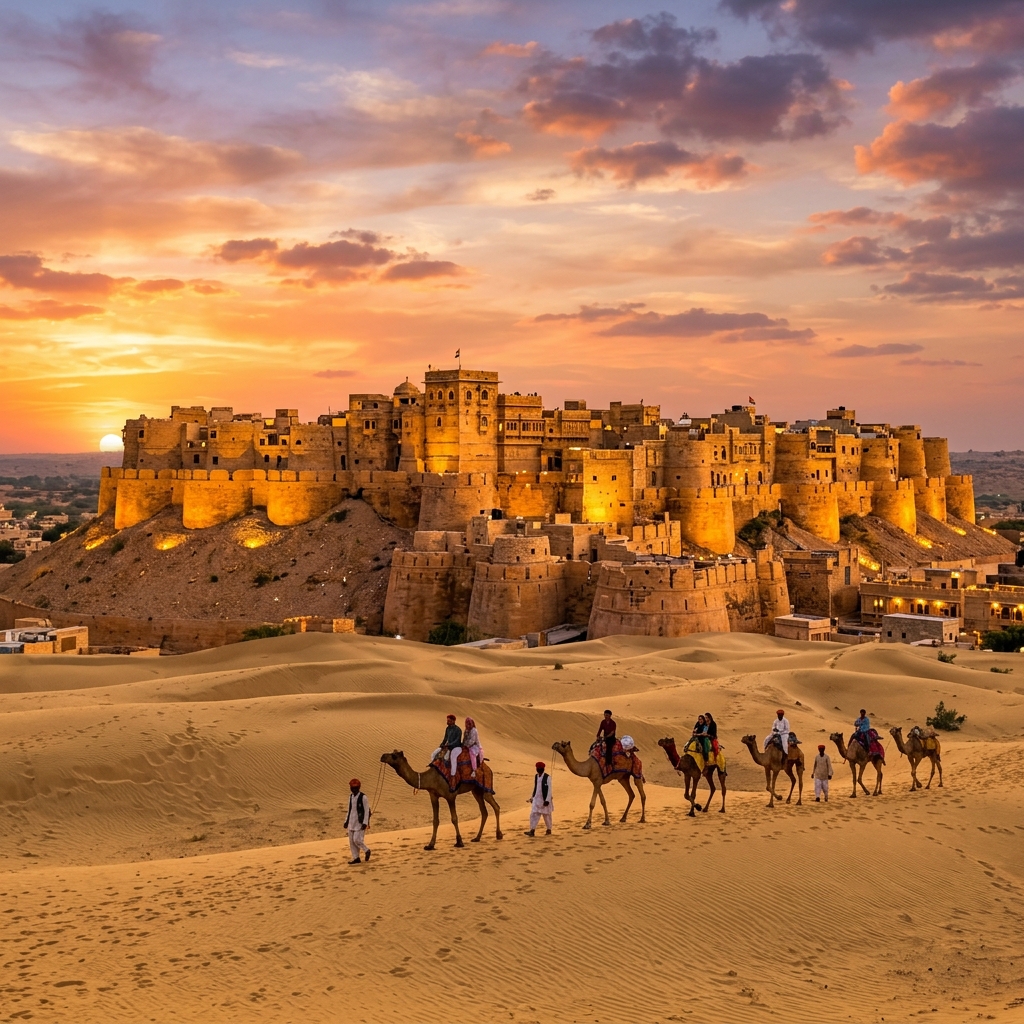
- If you are heading west instead: do Deshnoke as an out-and-back from Bikaner before breakfast, then leave for Jaisalmer. That leg is around 330 km and five and a half hours on a good road.
Getting to Bikaner in the first place: from Jaipur it is about 330 km and six hours; from Delhi it is a long day that we usually break at Mandawa in the Shekhawati region. We run couples and pairs in an Innova Crysta, families of four to six in a Tempo Traveller, and larger groups in an Urbania or a coach. Every car has a driver who has done this road many times, which matters on the Bikaner–Jodhpur stretch, where livestock on the highway is routine rather than exceptional.
Should you go at all?
The honest answer: if the idea of rats genuinely distresses you, the temple will not talk you round, and there is no shame in waiting in the outer courtyard while the rest of your party goes in. You will still see the silver doors and the facade, which are the best of the architecture anyway.
But if you can manage the first two minutes, something shifts. What looks like a spectacle from outside is, from inside, an ordinary morning in a place where a particular idea about death and return is taken completely seriously. It is one of the few sites in Rajasthan that refuses to be photographed into a postcard, and it stays with people. We have written before about how India is a collection of stories rather than a checklist of monuments, and Deshnoke is the sharpest example we know.
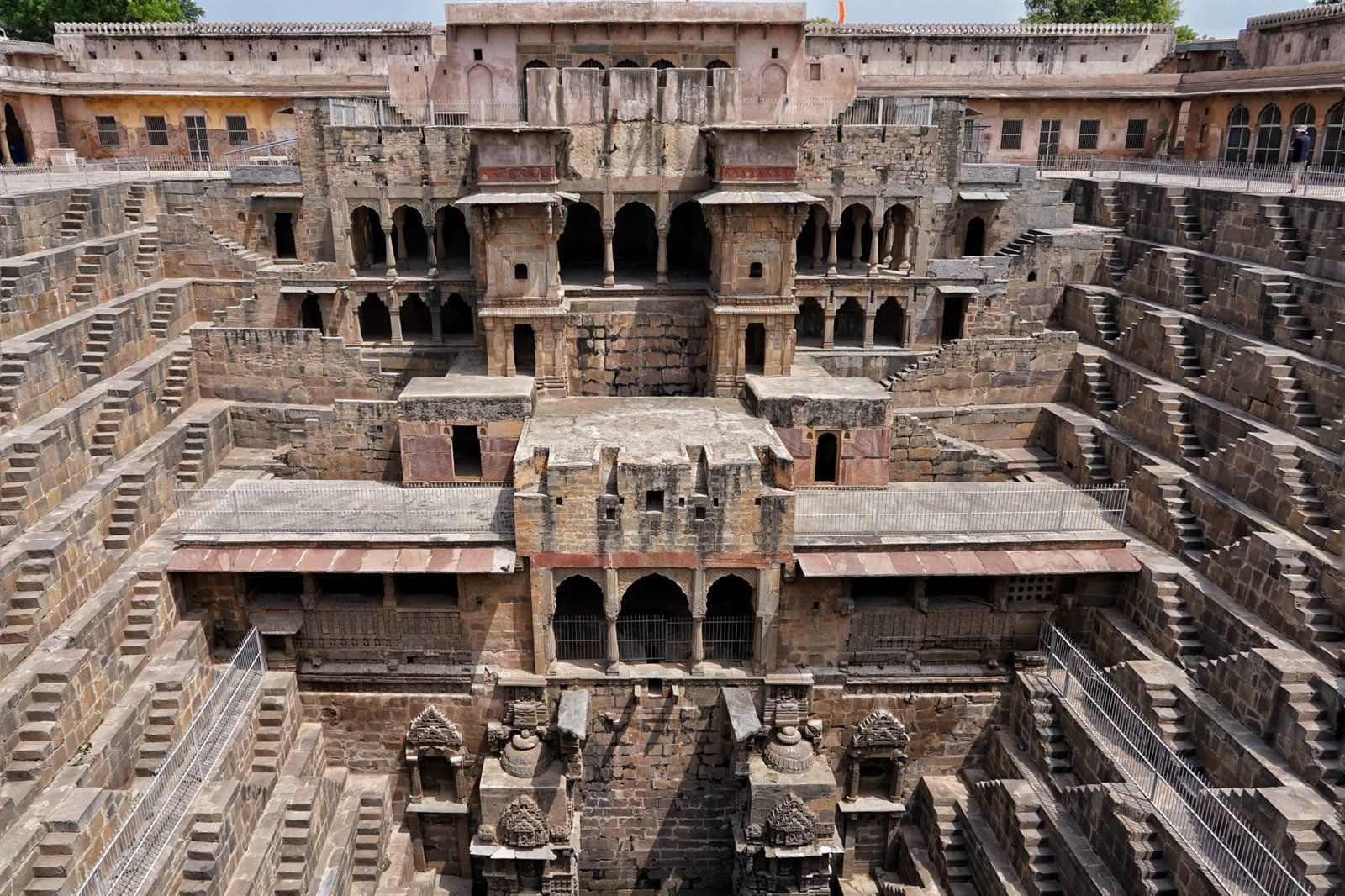
If you are drawn to places where architecture and belief are inseparable, the same instinct will serve you well at the great stepwell of Abhaneri, which we covered in our guide to Chand Baori and the Abhaneri Festival.
Frequently asked questions
Is there an entry fee for the Karni Mata temple?
No. Entry is free. There is a small camera fee for still and video photography, and the adjoining museum charges two rupees.
Do I really have to take my shoes off?
Yes. It is an active place of worship and the rule applies to everyone. Wear socks; your shoes go straight back on afterwards.
Will the rats climb on me?
Almost certainly not. They stay low and move around your feet. One running across your foot is considered a piece of good luck.
How long does a visit take?
Thirty to sixty minutes for the temple and courtyard, plus ten for the museum. Allow around two and a half hours in total from Bikaner, including the drive each way.
What is the best time of day to visit?
Between 5 and 7am: cooler marble, active kabbas, fewer people, and better light on the silver doors.
Planning a Rajasthan trip that includes Deshnoke
We build every itinerary around how our guests actually travel: how early you are willing to start, how long you want to spend in the car, and what you would rather skip altogether. If you would like Bikaner and Deshnoke worked into a wider Rajasthan route, tell us what you have in mind and we will send back a plan with realistic driving times rather than optimistic ones.