Most North India tours start and finish with the same three cities. Delhi, Agra and Jaipur deserve their fame. But North India is far bigger than the Golden Triangle, and the routes that branch off it are often where a trip stops feeling like a checklist. Below we compare three extensions we plan from our Jaipur office, with real days and drive times from our own tour sheets, and an honest word on who each one suits.
A quick orientation first. On our site, North India destinations covers everything from the Punjab plains to the tiger forests of Madhya Pradesh. Almost every English-speaking traveller, whether flying from London, New York or Sydney, lands in Delhi, so all three routes below assume you begin with a few days on the classic circuit. If you have not planned that part yet, our seven-day Golden Triangle itinerary sets out the core days.
North India tours compared: the three routes at a glance
- East along the Ganges — Golden Triangle plus Varanasi and Sarnath. Best for a first trip of 9–10 days.
- South into Bundelkhand — Agra to Orchha and Khajuraho by road. Best for art, architecture and quiet towns, and for anyone heading on to the tiger parks.
- North to Punjab and the foothills — Amritsar and Rishikesh. Best for travellers who want faith, food and the Himalayan rivers rather than more monuments.
Route one: the Ganges, Varanasi and Sarnath
This is the extension we suggest to most first-time visitors, and it is a published tour: the 8-night Golden Triangle with Varanasi. The shape is straightforward. Day 2 covers Old Delhi in the morning and then the road to Jaipur, 250 km in about five hours. After a full day in Jaipur, Day 4 is another 250 km and five hours to Agra, broken by the stepwell at Abhaneri and the red sandstone city of Fatehpur Sikri.
The Varanasi part is where the tour sheet gets interesting. Day 5 starts at 5.45 am at the Taj Mahal, when the light is soft and the crowds are thinner. On Day 6 you leave Agra at 9.00, drive back to Delhi (200 km, about four hours) and take an evening flight to Varanasi; non-stop flights between the two cities are scheduled at roughly an hour and a half. Day 7 is the reason people come: an early boat on the Ganges as pilgrims bathe and pray, Sarnath in the afternoon, then the Ganga Aarti from the river after dark.
Sarnath, where the Buddha gave his first sermon, sits about 10 km from the old city. One practical point we pass on to guests: the archaeological museum there, which holds the lion capital of the Ashoka Pillar, is closed on Fridays. We plan the Sarnath afternoon around that.
Who it suits, and the honest downside
Varanasi is intense. The cremation ghats are part of daily life on the river, and you will see them from the boat. Some guests find this the most moving morning of their trip; a few find it hard. Our first-timer's guide to Varanasi is frank about what to expect. We would also advise against squeezing Varanasi into a single night between two flights. The published tour gives it two nights and a full day, and that is the minimum we are comfortable with.
Route two: Orchha and Khajuraho, the temple road south
If you have already seen the Golden Triangle, or you simply prefer small towns to big cities, this is the route we would point you towards. It appears inside our 18-night wildlife tour, and it works just as well on its own.
From Agra the road runs south through Gwalior and Jhansi to Orchha. Our tour sheet allows about four hours for the drive; web route planners put it at roughly 236–255 km, and on a day with slow lorries we would budget closer to five. Orchha is the surprise of this route. It sits on the Betwa river, with a fort-palace on an island, the Jahangir Mahal built for a Mughal emperor's visit, the towering Chaturbhuj temple, and a line of royal cenotaphs along the riverbank. The Ram Raja temple, where Rama is worshipped as a king, is still very much in use. An evening walk by the river is about as gentle as North India gets.
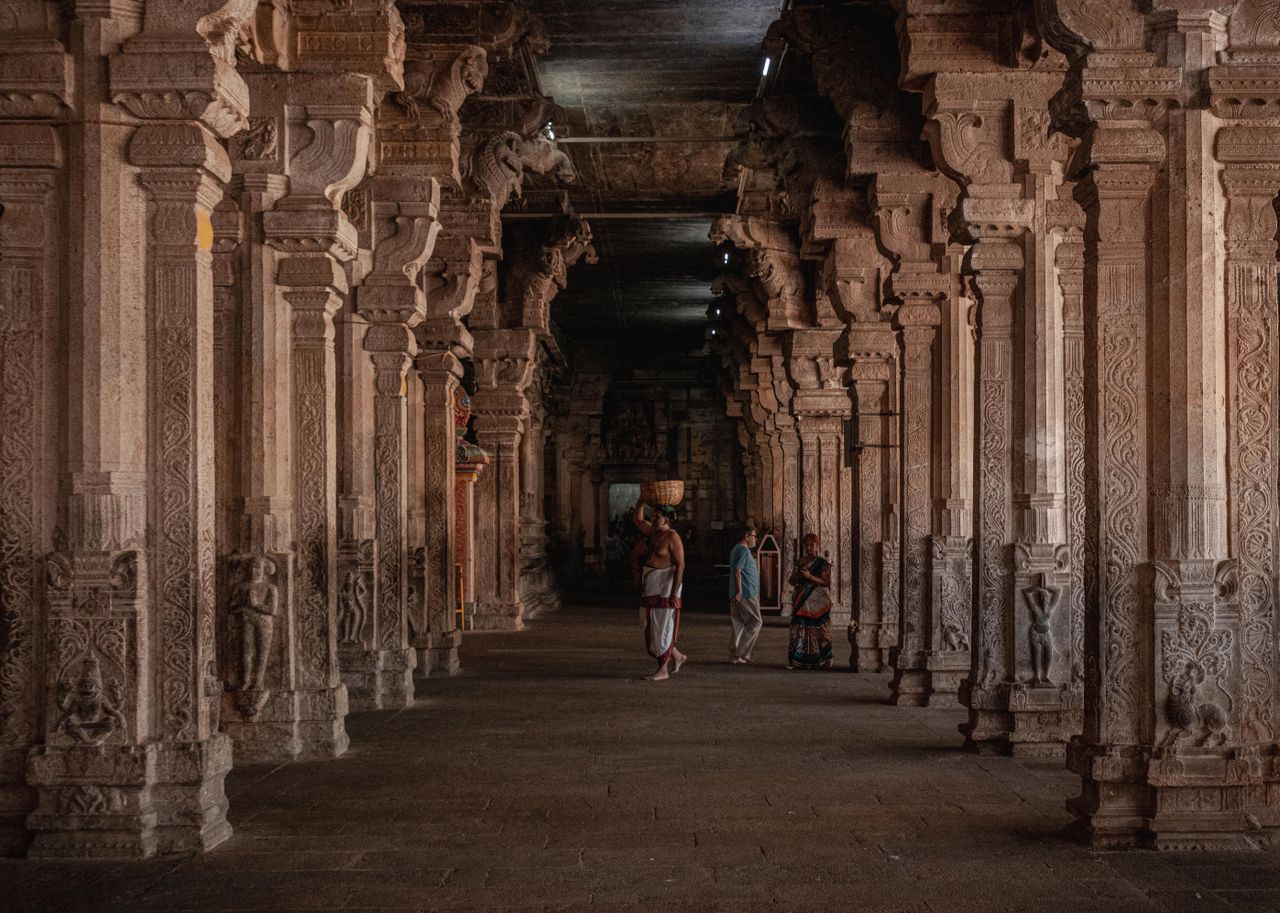
The next day is 185 km to Khajuraho, about three and a half hours on our sheet, which matches what current route planners show. The temples of Khajuraho were built under the Chandela kings, whose power peaked between roughly 950 and 1050. There were once 85 temples; UNESCO, which listed the group in 1986, counts around 20 surviving, and local guides usually say 22. The carvings everyone has heard about are a small fraction of the sculpture. The Kandariya Mahadeva temple in the Western Group is the one to spend time on, and the quieter Eastern Group, with its Jain temples, is worth an extra hour.
Getting out of Khajuraho
Khajuraho is remote, and that has always been the catch. Air India has announced winter flights from 25 October 2026 linking Khajuraho with both Delhi and Varanasi. Reports differ on whether they run daily or four times a week, so we confirm the schedule when we book. If the flights operate as announced, routes one and two can finally be joined: Agra, Orchha, Khajuraho, then a short hop east to Varanasi, without the long backtrack to Delhi.
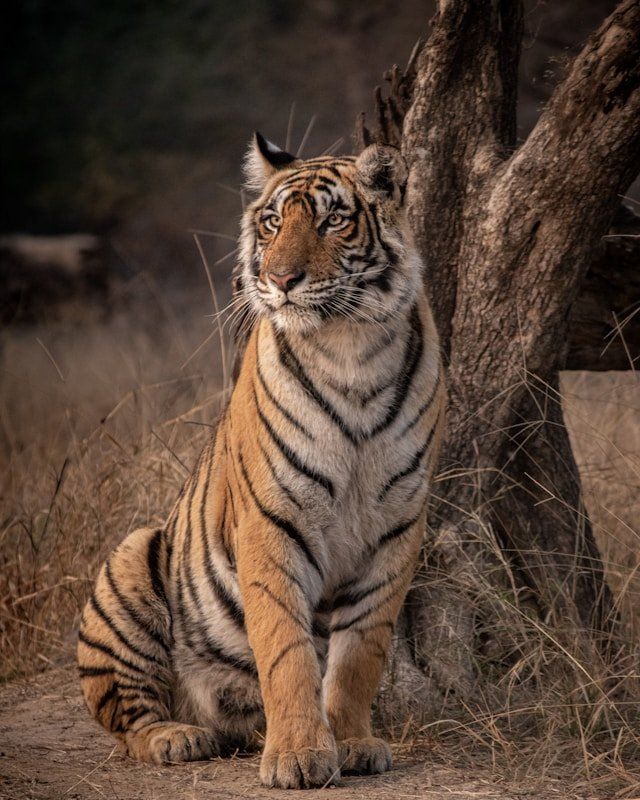
The other way out is south, into the tiger country of Madhya Pradesh. On our wildlife tour the next leg is Khajuraho to Bandhavgarh, 250 km in about five hours; our five-day Bandhavgarh tiger plan picks up the story from there.
Route three: Amritsar and Rishikesh
This is the route for travellers who have had their fill of forts. Amritsar is about faith and food; Rishikesh is about the river and the mountains starting to rise. We do not publish a fixed itinerary for it, so every version is built to order, but the logistics are well established.
Amritsar is easiest by train. The Shatabdi from New Delhi takes around six hours, and the Vande Bharat is a little quicker at about five and a half. The Golden Temple in Amritsar is the centre of everything: the gilded sanctum in its pool, and the langar, the community kitchen that serves a free meal to anyone who sits down, tens of thousands of people a day. Jallianwala Bagh, the memorial garden, is a short walk away. In the late afternoon, the Beating Retreat ceremony at the Attari–Wagah border, about 30 km out of town, is loud, theatrical and oddly cheerful. Its start time moves with the seasons and has changed several times since 2025, so we check it the week you travel.
Rishikesh sits where the Ganges leaves the hills, about 230–260 km from Delhi, five to six hours by road. Mornings of yoga, the evening aarti at Triveni Ghat or Parmarth Niketan, and walks across the suspension bridges are the rhythm here. For more than a taster, combine it with one of our yoga tours.
The thing we advise against
Do not try to drive straight from Amritsar to Rishikesh. On the map they look like neighbours; on the road it is roughly 426 km and eight to nine hours, longer with stops. We would rather send you back to Delhi on the train and drive up to Rishikesh fresh the next morning.
Which route would we choose?
For a first India trip of 9–10 days, we'd suggest route one. The Golden Triangle plus Varanasi gives you the Mughal monuments, Rajput Jaipur and the spiritual life of the Ganges in one sensible loop. For a second trip, or for travellers who dislike crowds, route two is the better buy, and from this winter it may link neatly with Varanasi. Route three suits people who care more about atmosphere than architecture, and it needs at least four extra nights to be worth doing.
One honest drawback applies to all three. From around mid-December to January, dense fog settles over the northern plains, and past winters have seen dozens of flights and trains delayed at a time out of Delhi, Amritsar and Jaipur. We build slack into winter itineraries — no tight same-day connections to international flights — and we would rather you lose a morning than a whole leg.
The other honest point is about the roads. A 250 km day is still a full day, which is why we keep each leg short and use a private car with the same driver throughout. Our guide to how a private car with driver works in India explains what that looks like day to day. One guest, Luigi D, spent five days with his driver Manoj on a route through Mandawa, Nawalgarh, Jaipur, Abhaneri, Agra, Mathura, Vrindavan and Gokul, and wrote on TripAdvisor (February 2026): "I could test pre-Holi festival air." The Braj towns around Mathura make an easy add-on to any of these routes in late winter; see the Braj Holi festival page for what happens there.
We have planned North India from our Jaipur head office since 2005, and you can read what guests say about their drivers and routes on our guest reviews page. All three extensions can be built into a private North India tour or added to any of our Golden Triangle tours.
FAQ
How many days do I need for a North India tour?
Seven days covers Delhi, Agra and Jaipur only. Add two to three nights for Varanasi, three for Orchha and Khajuraho, or four for Amritsar and Rishikesh. Ten to fourteen days is a comfortable range.
Do I need a visa?
Travellers from the UK, US, Australia and most of Europe can apply for an e-Visa online before departure. Our India visa guide for US, UK and EU travellers covers the steps.
Can I combine North India with tiger safaris?
Yes. Khajuraho is the natural gateway: Bandhavgarh is about five hours' drive, and Kanha follows on from there. Allow at least three nights per park.
When is the best time for these routes?
October to March. Expect fog in the early mornings from mid-December to January, especially around Delhi, Amritsar and the Ganges plain. April to June is very hot across the plains.
Tell us which route appeals, how many days you have and how you like to travel, and we will draft a day-by-day plan for you. Send us your North India tour enquiry.