What is the Golden Triangle in India? It is the classic first-time route linking three cities: Delhi, Agra and Jaipur. On the map they form a rough triangle of 700 km or so by road, each leg a drive of four to five hours. The best time to go is October to March, and from the UK or US we would plan six nights on the ground as a minimum. Below are the things people believe about the route, and what we see from our Jaipur office, where we have planned these trips since 2005.
If you want the day-by-day plan rather than the explanation, we have already written it up as our seven-day Golden Triangle itinerary.
Myth: the Golden Triangle is a Rajasthan tour
Reality: only one corner of it is in Rajasthan. Delhi is the national capital, Agra is in Uttar Pradesh, and Jaipur is the capital of Rajasthan. So Jaipur is your only taste of Rajasthan.
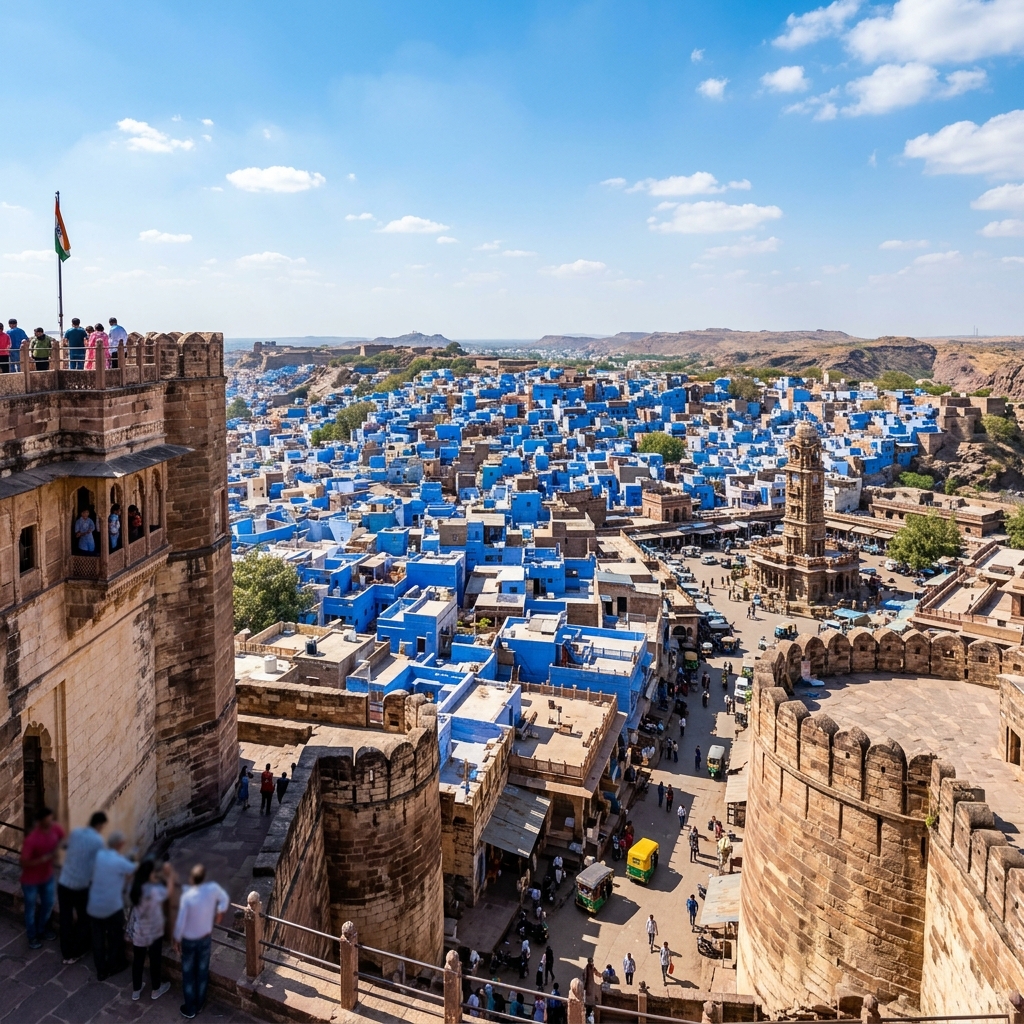
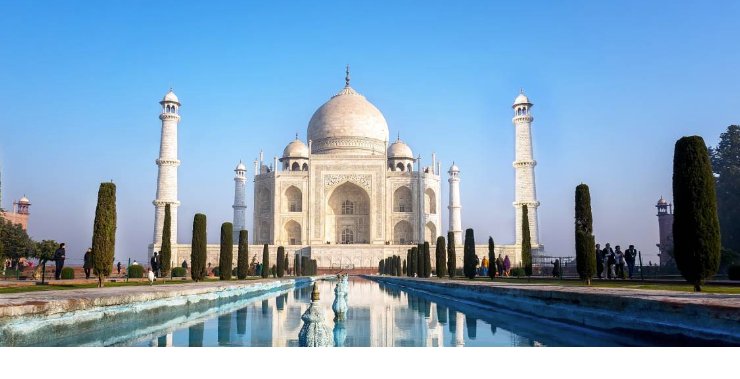
Delhi gives you the Red Fort, Jama Masjid and Humayun's Tomb. Agra has the Taj Mahal and the red sandstone Agra Fort. Jaipur, the Pink City, has Amber Fort, the City Palace and the bazaars; our page on the Golden Triangle destinations covers all three in more detail.
Myth: you can do it properly in three days
Reality: you can see it in three days, but you will mostly see a car window. Our own 6-night Golden Triangle tour is a good measure of what a comfortable pace looks like:
- Day 1: arrive in Delhi. Our driver meets you outside arrivals with a placard bearing your name, and the rest of the day is for sleep.
- Day 2: Old Delhi from 8.00, lunch, then Delhi to Agra, about 200 km and four hours, arriving in the evening.
- Day 3: the Taj Mahal at 5.45 am for the early light, breakfast, then Agra Fort.
- Day 4: Agra to Jaipur, about 250 km and five hours, stopping at Fatehpur Sikri and the Chand Baori stepwell at Abhaneri.
- Day 5: Amber Fort from 8.00, then the City Palace, Hawa Mahal and Jantar Mantar.
- Day 6: Jaipur to Delhi, about 250 km and five hours, with New Delhi's sights in the afternoon.
Six nights is tight but honest. Squeeze it into four and you lose the Taj at dawn or the stops on the Agra–Jaipur road. We'd suggest seven or eight nights if you can spare them, with two full days in Jaipur; how we would spend two days in Jaipur shows what the extra day buys you.
Myth: any day is a Taj day
Reality: the Taj Mahal is closed to visitors every Friday, when the mosque on its grounds is used for prayers. It opens from about half an hour before sunrise to half an hour before sunset on the other six days. It is the planning mistake we fix most often. We build the whole route backwards from the Agra day, and if the calendar forces a Friday there, the honest workaround is to see the Taj from across the Yamuna at Mehtab Bagh, which is a view rather than a visit.
Myth: it is a year-round trip
Reality: the route is open all year, but it is only pleasant for about half of it. October to March is the season we recommend. From April the plains heat up quickly, and May is the hottest month; then come the monsoon months, greener and quieter but humid, with downpours that slow the roads. Our month-by-month guide to Rajasthan's weather covers Jaipur in more detail, and the pattern for Delhi and Agra is similar.
The honest downside of the winter peak is fog. India's aviation regulator treats roughly 10 December to 10 February as the fog window at Delhi, and dense mornings regularly delay or cancel flights and slow the early drives. We plan for it with a spare evening in Delhi before the flight home. If you can choose, November and the second half of February are the sweet spots.
Flying in from the UK or US
Delhi is where almost every Golden Triangle trip starts and ends. From London Heathrow, British Airways and Virgin Atlantic fly non-stop in about eight and a half to nine hours; Air India also flies non-stop, but its flights currently take longer, often over ten hours, because they route around closed airspace. India is five and a half hours ahead of the UK in winter, so an overnight flight lands you in the middle of an Indian day. Hence the empty first day.
For British passport holders the 30-day e-Tourist Visa is currently reported at US$25 for arrivals from July to March (US$10 from April to June); check the official fee on the day you pay, apply at least four days before arrival and use only the government portal. Our India visa guide for US, UK and EU travellers walks through the form. American readers will find their flights, the time difference and the US fee in our answers for travellers booking from the USA.
Myth: it is just three cities
Reality: some of the best moments are between them. Fatehpur Sikri, Akbar's red sandstone capital, sits right on the Agra–Jaipur road, and the stepwell at Abhaneri, one of the largest and deepest in India, is a short detour closer to Jaipur. That is why most of our guests do the route with a private car and driver rather than by train.
The driver ends up being part of the trip. David and Carolyn Lamper from Manchester, who toured Rajasthan with Agra with us for 13 nights, put it this way in their Google review:
"Our driver, Anand, was the true hero of our trip. Navigating India's chaotic traffic requires a special kind of skill, and Anand made us feel safe and relaxed every step of the way."
You can read more like it on our guest reviews page.
Myth: the triangle shows you India
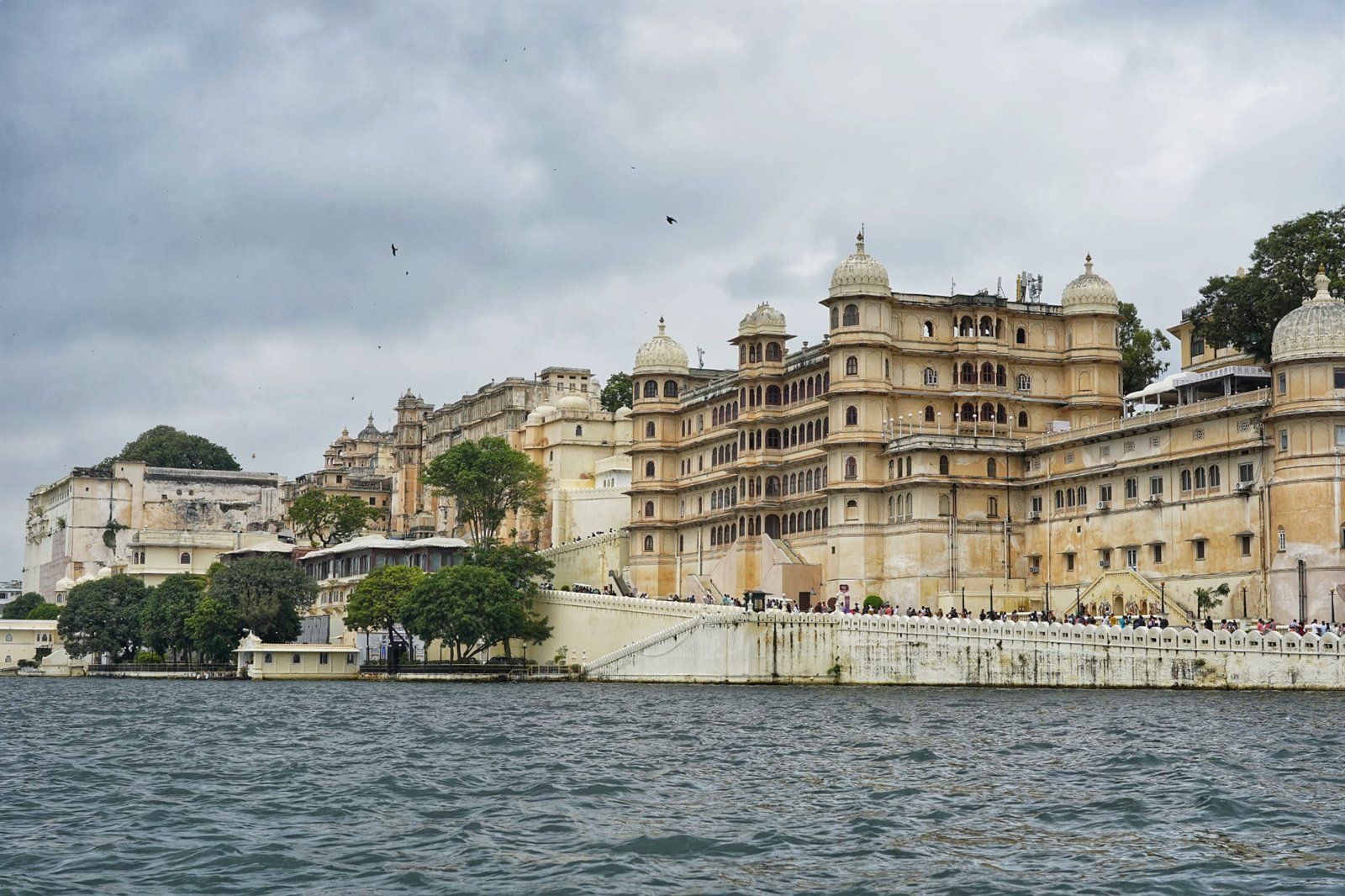
Reality: it shows you one strand of North India, the Mughal and Rajput heritage, done very well. It is also the busiest tourist circuit in the country; early starts are the only real defence against the crowds. What it does not show you is the south, the mountains or the quieter Rajasthan towns. We would not tell a first-timer to skip it, but if you have ten nights or more, add one extension rather than more cities. Our comparison of Ranthambore, Udaipur, Varanasi and Pushkar as extensions is the place to start, and all our Golden Triangle tours are listed by length.
Questions we are asked about the Golden Triangle
How many days do you need for the Golden Triangle?
Six nights on the ground is our minimum, starting and ending in Delhi. Seven or eight nights gives you a second day in Jaipur and some slack for jet lag and winter fog.
What is the best month for the Golden Triangle from the UK?
November and February: cool, dry days and less fog risk than late December and January. Christmas works too if you book early.
Is the Golden Triangle good for a first trip to India?
Yes. The distances are manageable, the sights are among the finest in the country, and Delhi has the best international connections.
Can you do the Golden Triangle by train?
You can, but you lose the stops at Fatehpur Sikri and Abhaneri and still need transfers at each end.
If you would like us to plan your route around your dates, and around that Friday at the Taj, send us your travel dates and we will draft an itinerary.