The things to do in Jaipur that matter on a first visit fit into two full days: Amber Fort, the City Palace, Jantar Mantar and the Hawa Mahal on the first, and a slower second day for Nahargarh, the bazaars, the block printers of Sanganer and the temples at Galta. That is the advice we give from our own office here, where we have planned trips since 2005, and our founder, Karni Singh, was born and educated in this city.
Jaipur in one paragraph
Sawai Jai Singh II founded Jaipur in 1727 and laid it out on a grid, which is why our tour notes call it one of the first planned cities in the world. The old walled city was painted its terracotta pink in 1876 for the visit of the Prince of Wales, and the colour has been kept ever since. UNESCO listed Jantar Mantar in 2010 and the walled city itself in 2019. You can read more on our Jaipur destination page; what follows is how we would spend the time.
Day one: the four sights everyone comes for
Amber Fort, early
Amber sits on a ridge about 11 km from the centre, above Maota Lake. On every Golden Triangle and Rajasthan tour we run, the car collects guests at 8.00 for Amber, and we would not change that. By late morning the courtyards fill with coach groups and the stone throws back the heat, even in winter.
One thing we advise against: the elephant ride up the ramp. Our older tour sheets still say "the elephants await you", but the practice is contested on welfare grounds and there is a long-running campaign to end it. Walk up the cobbled ramp instead.
If you have energy left, Jaigarh Fort stands on the hill directly above. It was built to protect Amber and holds the Jaivana, once the largest cannon on wheels in the world.
City Palace and Jantar Mantar
Back in the walled city, the City Palace is still partly a private home: the former ruling family lives in the upper floors of the Chandra Mahal, and only the lower part is open as a museum. The textile gallery in the Mubarak Mahal is the best room in the complex if you have any interest in cloth, and in Jaipur you probably will.
Jantar Mantar is next door, and it is the sight our guests most often say they underestimated. Jai Singh II built it between roughly 1728 and 1734, and its great sundial, the Samrat Yantra, is about 27 metres high and reads local time to within about two seconds. Hire a guide here. Without one it is a yard of strange stone shapes.
Hawa Mahal from the street
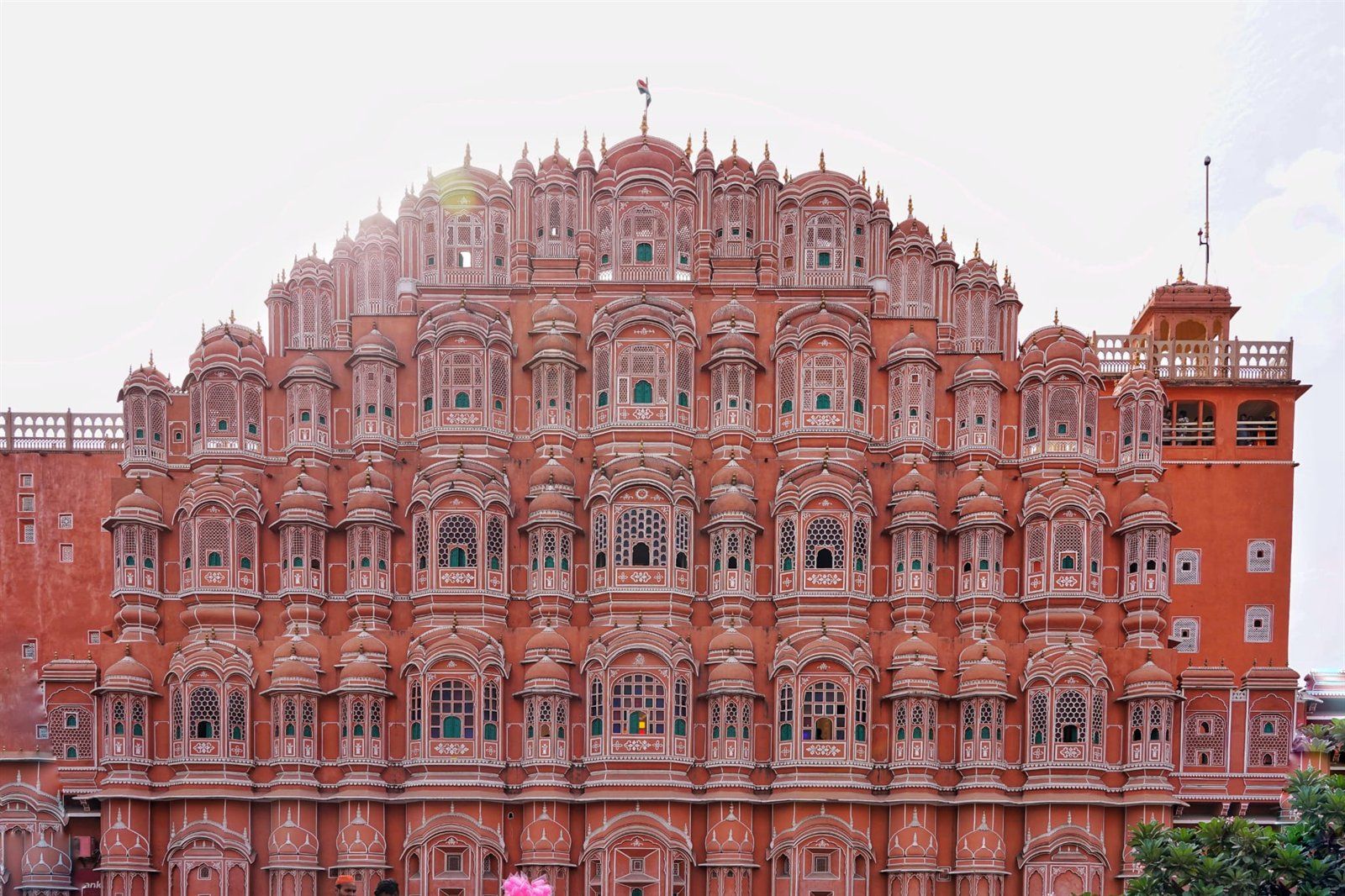
The Hawa Mahal was completed in 1799 under Sawai Pratap Singh, with 953 small windows that let the women of the court watch processions unseen. Here is the honest downside: it is essentially a facade, and the inside is narrow and quickly done. The famous view is from the street opposite, ideally in the soft light of late afternoon. Give it twenty minutes, not two hours.
Leave the evening for the markets, as our tour notes do: Johari Bazaar for jewellery, Bapu Bazaar for textiles.
Day two: the side of Jaipur most visitors miss
A second day is where Jaipur stops being a list of monuments. We would suggest a later start and three pieces.
Sanganer in the morning. About 16 km south of the city, Sanganer is where much of Jaipur's hand block printing is still done. Watching a printer line up a carved wooden block, colour after colour, explains every bedspread you will see in the bazaars, and gives you a fair idea of what the real thing should cost.
Galta and the Birla Temple in the afternoon. On our 19-night Royal Rajasthan tour, guests arrive from Ajmer (150 km, about three hours) and spend that first afternoon at Galta ji, the temple complex in a gorge of the Aravalli hills with its tanks and its troops of monkeys, before the white marble Birla Temple. It works just as well on a second day.
Nahargarh for sunset. The fort on the ridge above the old city is where we send people at the end of the day. The light over the pink city is the reason; the fort itself is secondary.
If you would rather leave the city, day two can be Samode instead: the palace village is 50 km away, about an hour by car, and our 8-night Golden Triangle tour with Samode builds a night there into the route.
Why we recommend two days, not one
Most of our published tours give Jaipur one full sightseeing day. Guests coming from Agra drive 250 km, about five hours, stopping at Fatehpur Sikri and the stepwell at Abhaneri, and reach the city in the evening. The next day is Amber, the City Palace, Jantar Mantar and the Hawa Mahal, with the evening in the bazaars. It works, but it leaves nothing for Galta, Sanganer or a long lunch.
On a tailor-made trip we would add the second night almost every time. If you are building a longer route, our article on the 12 places to visit in Rajasthan we would choose shows where Jaipur fits, and the 7-day Golden Triangle itinerary shows the shorter version with Delhi and Agra. The stop at Abhaneri on the way in has its own story in our guide to Chand Baori.
Things to do in Jaipur with a driver, not a taxi app
Jaipur's sights are spread out: Amber is outside the city, Sanganer is to the south, Nahargarh is up a hill road. A car and driver for the day saves a great deal of haggling, and the drivers know which lunch places are worth the stop. One of our guests put it better than we could:
"He was so much more than a driver—he was our "fixer," our link to excellent local English-speaking guides, and the person who found us the best authentic lunches, from traditional thalis to the most delicious street-side samosas and sweets." — David Lamper, Google review (13 nights, Rajasthan with Agra)
You can read more of what guests say on our reviews page, and see how the vehicles and drivers work on our car rental with driver page.
Getting to Jaipur from the UK and US
There are no nonstop flights from London or New York to Jaipur. Most travellers fly into Delhi and either take a connecting flight or drive; our tour sheets give the road as 250 km, about five hours. From London, Delhi is roughly eight and a half to ten and a half hours' flying; from New York, about fifteen. In the UK winter, India is five and a half hours ahead.
British, American and Australian passport holders can use the e-Visa, which should be applied for at least four days before arrival. Our India visa guide for UK, US and EU travellers covers the process.
November to February is the comfortable window. In November, days are typically around 28–29°C and nights drop to about 13°C, so pack a layer for Nahargarh at dusk. For the rest of the year, see our month-by-month guide to Rajasthan.
Frequently asked questions
How many days do you need in Jaipur?
Two full days, plus the evening you arrive. One day covers Amber, the City Palace, Jantar Mantar and the Hawa Mahal, but it is rushed.
What is the best time of day to visit Amber Fort?
As early as it opens. We collect guests at 8.00, which beats both the heat and most of the tour groups.
Is the Hawa Mahal worth going inside?
Only briefly. The view that made it famous is the facade from the street opposite; the interior is narrow and quick to see.
Can Jaipur be combined with a longer Rajasthan tour?
Yes, and it usually is. Every one of our Rajasthan tours passes through Jaipur, typically with Udaipur, Jodhpur and Pushkar.
If you would like Jaipur planned around your own dates and pace, send us an enquiry and one of our planners in Jaipur will reply.