Heritage tours of India usually mean Rajasthan, and we are not about to argue: our office is in Jaipur, and forts and palaces are most of what we plan. But some of the country's finest monuments sit far from the desert, in Karnataka and Madhya Pradesh. This guide to heritage tours in India beyond Rajasthan looks at three places we suggest to guests who have already seen Amber and Mehrangarh, or who simply prefer temples to ramparts: Hampi, Khajuraho and Orchha, plus the Hoysala temples that pair so well with Hampi.
Below are the myths we hear most, and what we actually tell guests.
Myth one: "Heritage tours of India means Rajasthan"
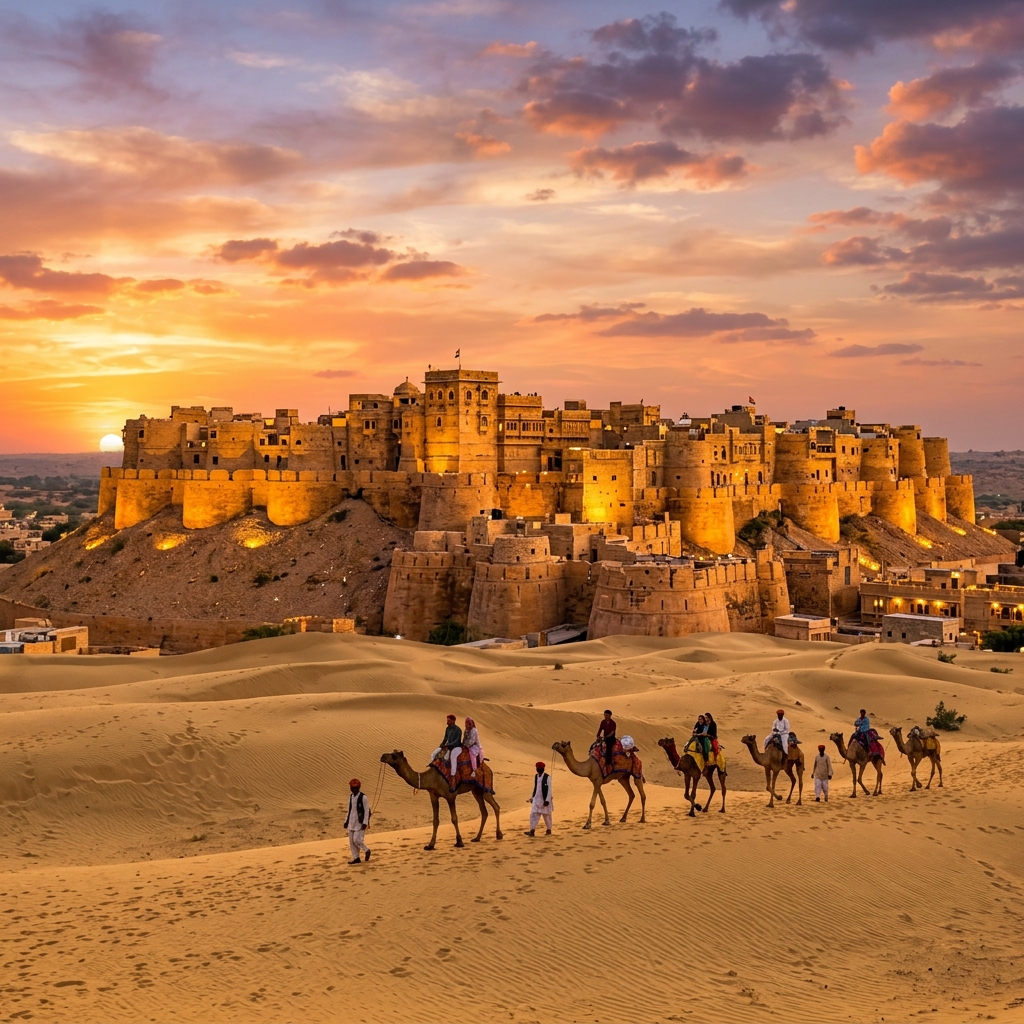
Rajasthan gives you the Rajput world: hill forts, painted havelis, palaces turned into hotels. It is a magnificent introduction, and our own Rajasthan tours run from one week to nearly three. Our tour sheets even borrow a name from elsewhere when they describe the temples at Osian on the road to Jodhpur, calling them "the Khajuraho of Rajasthan".
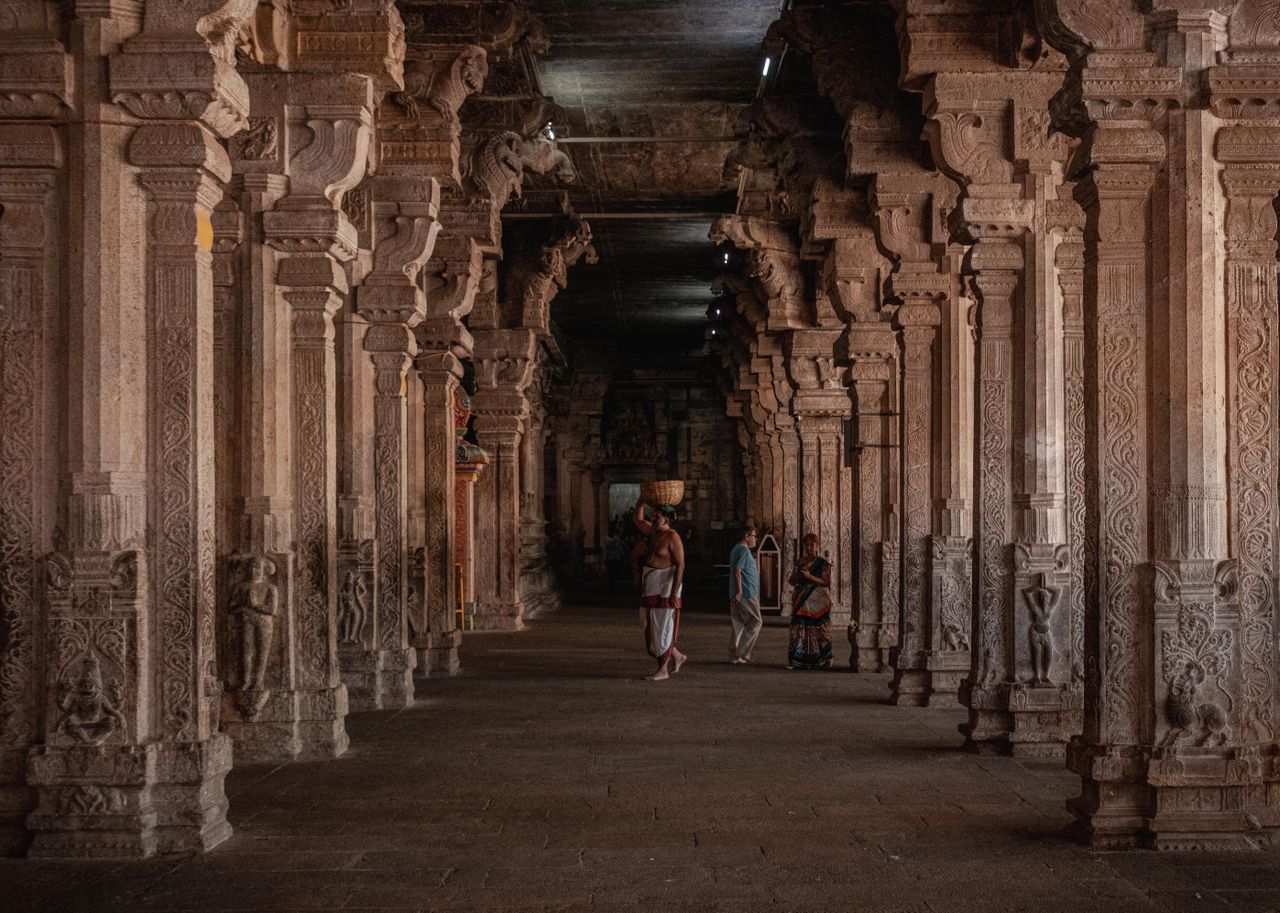
That borrowed name says a lot. The temple art of central and southern India is older, and stylistically quite different. At Khajuraho the Chandela kings built in honey-coloured sandstone roughly a thousand years ago. At Hampi, the Vijayanagara rulers raised a capital among granite boulders between the fourteenth and sixteenth centuries. The Hoysala temples of Belur and Halebidu date from the twelfth and thirteenth centuries. Hampi and Khajuraho were both inscribed as UNESCO World Heritage Sites in 1986, and the Hoysala temples joined the list in 2023 as the "Sacred Ensembles of the Hoysalas".
A second trip built around these places will not feel like a repeat. If you are still deciding how long to give Rajasthan itself, start with our comparison of 7, 10 and 14-day Rajasthan routes.
Myth two: "Khajuraho is all about the erotic carvings"
This is the one we correct most often. The sensual sculptures are real, and they are famous for good reason, but they are a small share of what is carved on these walls. Most of the figures are gods, dancers, musicians, soldiers and scenes of daily work. The Kandariya Mahadeva temple, the finest of the Western Group, rises in tiers meant to suggest a mountain peak.
On our 18-night wildlife itinerary, Khajuraho is the stop between Orchha and the tiger forests. The day is set out simply: the road from Orchha (185 km, about three and a half hours on the tour sheet), check-in, then the Western Group, with the Varaha, Lakshmana, Vishwanath and Kandariya Mahadeva temples, followed by the Eastern Group's Jain temples and the Dulhadev and Chaturbhuj shrines. The sheet also notes that of an original 85 temples, 22 survive.
Our advice is to see the Western Group early in the morning or late in the afternoon, when the low sun brings out the depth of the carving. You can read more on our Khajuraho destination page.
If you are coming for culture, it is worth knowing about the Khajuraho Dance Festival, which in recent years has taken place in late February against the floodlit Western Group (the 2026 edition ran from 20 to 26 February). Dates for 2027 had not been announced when we wrote this, so check before you build a trip around it.
Myth three: "Orchha is a quick stop on the way to Khajuraho"
Most people have never heard of Orchha, and the ones who have usually plan it as a lunch break. We would suggest at least one night, and two if you can spare them.
Orchha sits on the Betwa river. The fort-palace stands on an island, the Jahangir Mahal was built for a Mughal emperor's visit, the Chaturbhuj temple towers over the village, and a row of royal cenotaphs lines the riverbank. Our tour sheet sends guests up to the Laxmi temple on the hill for the best view of it all. The Ram Raja temple, where Rama is worshipped as a king, is a working shrine rather than a monument, and the evening atmosphere around it is the part of Orchha guests tend to remember. Orchha joined UNESCO's tentative list in 2019, but it is still a quiet, small place.
Getting there is easier than it looks. Orchha is roughly 16 km from Jhansi railway station, and the Gatimaan Express is scheduled to run from Delhi's Hazrat Nizamuddin to Jhansi in about four and a half hours. By road it comes after Agra, as on the route in our guide to North India tours beyond the obvious, which also covers how Orchha and Khajuraho fit with Varanasi.
Myth four: "Hampi is a day trip from Bengaluru"
We see this in plenty of online itineraries, and it is the myth we would most like to retire. Hampi is about 340–370 km from Bengaluru by road, which online route planners put at six to eight hours each way. The nearest airport with regular flights, Hubballi, is around 145–150 km away. There is a small airport at Jindal Vidyanagar, around 40 km from the ruins, but it has very few flights. Most visitors arrive by train at Hosapete, about 13 km from Hampi, or by car.
Once you are there, the site itself needs time. UNESCO describes more than 1,600 surviving remains spread over roughly 4,100 hectares. The Virupaksha temple is still in daily worship beneath its tall gateway tower. The Vittala temple complex holds the stone chariot, in fact a shrine to Garuda built in the shape of a temple cart, which now appears on India's 50-rupee note. Then come the Royal Enclosure, the Lotus Mahal and the Elephant Stables. The city fell in 1565, after the Battle of Talikota, and was never rebuilt. That is part of its power: you are walking through a capital that was simply left.
We'd suggest two full days at Hampi, with three nights in or near Hosapete. Plan your walking for early morning and late afternoon. Our Hampi destination page has more on the main sites.
The honest downside of Hampi
It is remote, and the heat is serious. In April and May daytime temperatures often reach around 38–40°C, and there is very little shade among the rocks. October to February is far more comfortable. None of our published tours includes Hampi yet, so it is always a tailor-made addition; that gives you flexibility, but it also means the logistics are built for your trip rather than tried on a set route.
Myth five: "The Hoysala temples aren't worth the detour"
Belur and Halebidu rarely make the first draft of a South India trip, yet they are among the best-preserved temple carvings in the country. Belur's Chennakeshava temple and Halebidu's Hoysaleswara temple are about 16 km apart, so they fit comfortably into a single day.
This is one place where we can show you a real route. Our 20-day South India tour covers it at the end. Day 16 is a Mysore city tour with an afternoon at Somnathpur, the third of the UNESCO Hoysala temples. Day 17 is the drive to Hassan, about 150 km and three hours on the tour sheet, with an optional stop at the Jain pilgrimage town of Shravanabelagola. Day 18 is Belur and Halebid, back to Hassan for the night. Day 19 is the road to Bengaluru, 200 km and around four hours, ready for an international flight home.
For UK travellers the Bengaluru end matters: there is a non-stop flight to London Heathrow of roughly ten to eleven hours, so you can fly home without connecting through Delhi or Mumbai.
Myth six: "I can combine all of them in one trip"
You can, but we usually advise against it. Orchha and Khajuraho belong to the north and pair naturally with Agra. Hampi and the Hoysala temples belong to Karnataka and pair with Mysore or a South India route. Linking the two means at least one domestic flight and often a lost day in transit. Unless you have three weeks or more, choose one half:
- The northern heritage loop: the Golden Triangle, then Orchha and Khajuraho, with a wildlife extension such as a Bandhavgarh tiger safari if you like. Ten to fourteen days.
- The southern heritage loop: Bengaluru, Hampi, Hassan for Belur and Halebidu, then Mysore. Around ten days, with time in Kerala if you want to finish on the coast.
Both work best from October to March. Both involve longer drives than most Rajasthan circuits, which is where a good driver matters. Elisa Lainati, who travelled with us on a tailor-made Rajasthan trip, wrote in her Google review: "we felt very secure with our driver Kana who was caring about us!" There are more on our reviews page, and our car and driver service runs on the same basis outside Rajasthan.
Our founder, Karni Singh, worked in Taj group hotels, including the Taj Lake Palace in Udaipur, before becoming a travel agent in 1998, and the office has planned from Jaipur since 2005. You can browse every route we publish on our tailor-made India tours page.
Questions we often get
What is the best time for a heritage tour of India outside Rajasthan?
October to March for all of these places. Hampi in particular is very hot in April and May, and central India's winter mornings can be chilly, so pack a layer.
How many days do I need for Hampi?
Two full days on site, so three nights. One day only lets you see the Virupaksha and Vittala temples in a rush.
Is Khajuraho suitable for children?
Yes. The explicit panels are a small part of the walls, and a good guide will pitch the commentary to suit your group.
Do I need a visa?
UK, US and Australian travellers can apply online for India's e-Tourist Visa. Apply on the official government portal at least four days before you arrive.
If one of these heritage routes appeals, tell us how many days you have and whether north or south suits you better, and we will shape it around your dates: plan your heritage tour with our Jaipur team.