Ask ten visitors to name a Rajasthani festival and nine will say Pushkar or Diwali. Teej rarely makes the list, which has always struck us as odd, because it is the one festival where Jaipur — our home city — puts its old self on full display: a royal procession through the walled city, women in green from wrist to ankle, swings hung from neem trees, and the first real celebration of the monsoon rains.
We have been walking guests into the Teej crowds for two decades. This guide covers what the festival actually is, the three different Teejs that confuse almost everyone, and how to plan a trip around it without getting the dates wrong.
First, the question everyone asks: which state is Teej celebrated in?
Teej is celebrated most famously in Rajasthan, and Jaipur's royal procession is its best-known public event. But it is not exclusive to us — the festival is kept with real devotion across the Hindi belt, particularly in Uttar Pradesh, Bihar, Madhya Pradesh and Haryana, and by Nepali communities as Hartalika Teej. If you see an exam question or a quiz asking "Teej is celebrated in which state," the expected answer is almost always Rajasthan. If you are deciding where to actually see it, the honest answer is also Rajasthan: nowhere else turns it into public spectacle the way Jaipur and Bundi do.
What Teej celebrates
At its heart, Teej is a monsoon festival kept by women. It marks the reunion of the goddess Parvati with Lord Shiva after a legendary penance, and married women fast and pray for the wellbeing of their husbands, while unmarried women pray for a good match. That is the textbook version. What you will notice on the ground is simpler: after two months of 45-degree heat, the rains have arrived, the hills around Jaipur have turned briefly green, and the city is in the mood to celebrate it.
Green is the festival's colour — green lehariya saris, green glass bangles, mehndi on both hands. Sweet shops stack pyramids of ghewar, the honeycomb-textured disc soaked in syrup that appears only in this season. If you are in Jaipur in the weeks around Teej, try it once plain and once with the malai topping, and you will understand why local families order it by the kilo.
The three Teejs (and which one you want)
The confusion starts because "Teej" is really three festivals spread across the monsoon, and their dates shift each year with the lunar calendar:
- Hariyali Teej — the "green Teej," falling in the month of Shravan (usually late July or August). This is the big one in Jaipur, with the royal procession on two consecutive evenings.
- Kajari (or Kajli) Teej — about a fortnight later, in Bhadrapada. Bundi, the small town south of Jaipur that most tourists skip, celebrates this one with a procession of its own — smaller, closer, and in some ways more atmospheric than Jaipur's.
- Hartalika Teej — later again, kept mainly at home with fasting and prayer rather than public events. Important religiously, but there is little for a visitor to see.
When guests tell us they want "to see Teej," we book them for Hariyali Teej in Jaipur, and if their dates allow it, we add Bundi for Kajari Teej two weeks later. That pairing shows you both the royal and the small-town versions of the same festival.
The Jaipur procession: what actually happens
On both evenings of Hariyali Teej, an ornamented idol of Teej Mata — the goddess as bride — leaves the City Palace and is carried through the old city from Tripolia Gate, accompanied by decorated elephants, camels, horses, brass bands, folk dancers and rows of palace retainers in ceremonial dress. The procession moves slowly through the bazaars of the walled city towards the Chaugan area, and the whole route fills hours before it starts.
A few things we have learned from standing in those crowds with guests:
- Come early and pick your spot. The procession starts in the late afternoon; by then the good vantage points along Tripolia Bazaar are gone. We position guests around two hours ahead.
- Rooftop seats exist. The tourism department arranges visitor seating on terraces near Tripolia Gate during the festival, and several rooftop cafés along the route sell seats for the evening. This is worth arranging in advance — ask us, or whoever is organising your trip, rather than negotiating on the day.
- It will probably rain. That is the point of the festival. Carry a light rain jacket rather than an umbrella; in a packed lane an umbrella makes you nobody's friend.
- The second evening is calmer. Same procession, thinner crowd. Photographers usually prefer it.
When is Teej? Getting the dates right
Because the festival follows the lunar calendar, Hariyali Teej lands anywhere from late July to mid-August, and the exact Gregorian date moves every year. Kajari Teej follows roughly two weeks after. We deliberately avoid printing specific dates in a guide like this — they age badly — but the rule of thumb holds: plan for the second half of the monsoon window, and confirm the current year's dates before booking flights. When you enquire with us we lock the itinerary to the actual festival calendar for that year.
Is monsoon a good time for a Rajasthan trip?
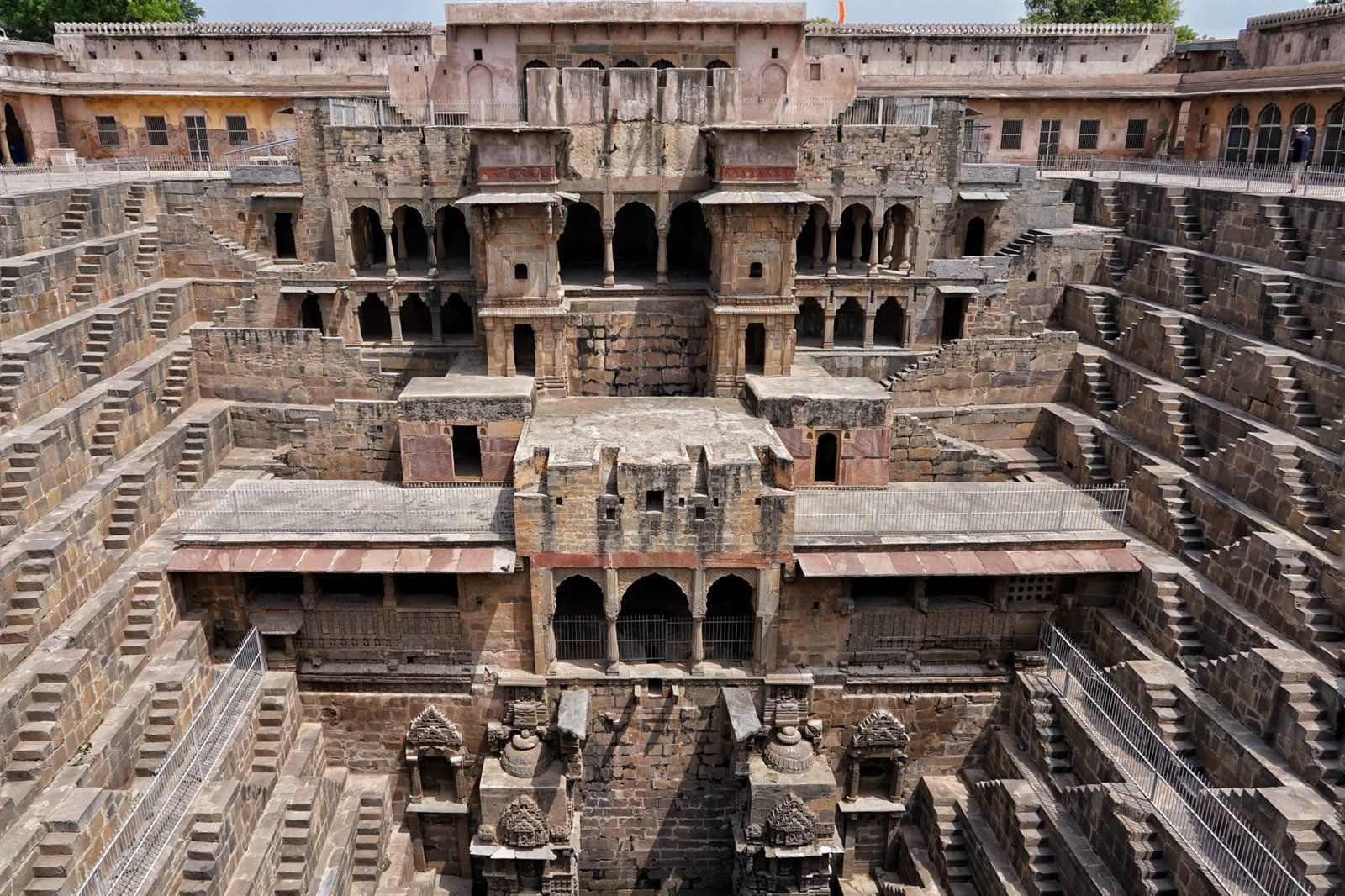
Honestly: it is our favourite underrated season. The forts photograph beautifully against grey skies, the Aravalli hills are green for the only weeks of the year, hotel rates are at their lowest, and the big sites are quiet. The trade-offs are real humidity and the occasional downpour that reshuffles an afternoon. A Teej-centred trip pairs well with Amber Fort, Nahargarh at sunset, a day in Bundi, and the stepwells at Abhaneri on the road to Agra — monsoon is exactly when a stepwell makes visual sense, because they were built for this water.
If you want the festival without building the whole route yourself, our Rajasthan itineraries can be shifted a few days in either direction to land on the procession dates, and our festival calendar shows what else falls in your travel window.
Frequently asked questions
Teej festival is celebrated in which state?
Primarily Rajasthan, where Jaipur's royal procession is the festival's signature event. It is also widely kept in Uttar Pradesh, Bihar, Madhya Pradesh, Haryana and in Nepal, mostly as a household and temple observance rather than a public spectacle.
What is the difference between Hariyali Teej and Kajari Teej?
Hariyali Teej falls in Shravan (July–August) and is the grand public celebration, especially in Jaipur. Kajari Teej comes about two weeks later and is best seen in Bundi. Hartalika Teej, later still, is a fasting day observed at home.
Can foreign visitors watch the Jaipur procession?
Yes — it is a public street event and visitors are welcome. Arranged rooftop seating near Tripolia Gate is the comfortable option; standing in the bazaar crowd is the memorable one. We usually suggest one evening of each.
What should I wear?
Anything modest and light; if you want to join the spirit of it, wear something green. Many of our female guests buy lehariya dupattas in the bazaar that afternoon — vendors stock extra during the festival.
Is Teej worth planning a whole trip around?
As the single anchor of a trip, no — it is one or two evenings. As the centrepiece of a week in Jaipur, Bundi and the surrounding country during the green season, absolutely.
Planning a monsoon trip and want it to land on the procession? Tell us your dates and we will build the route around the festival calendar — we have been doing exactly that from Jaipur since 2005.