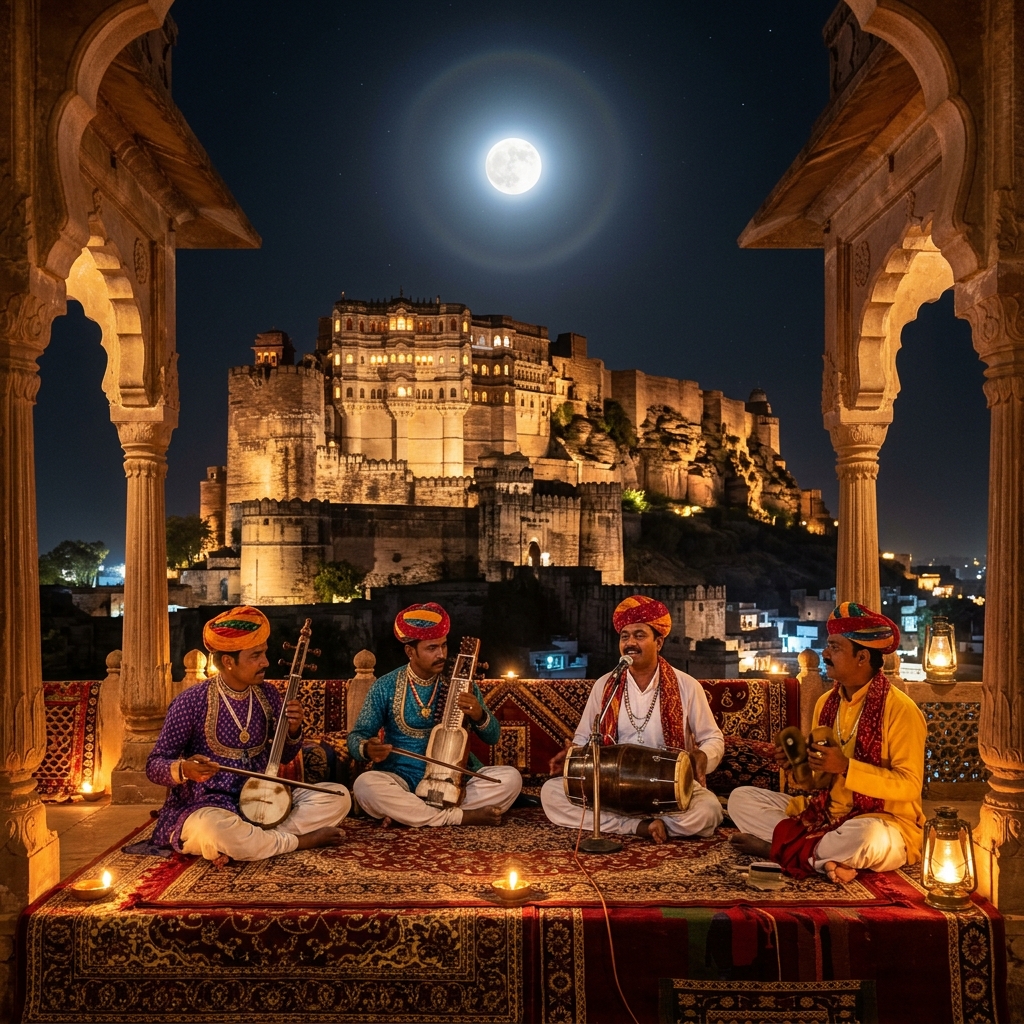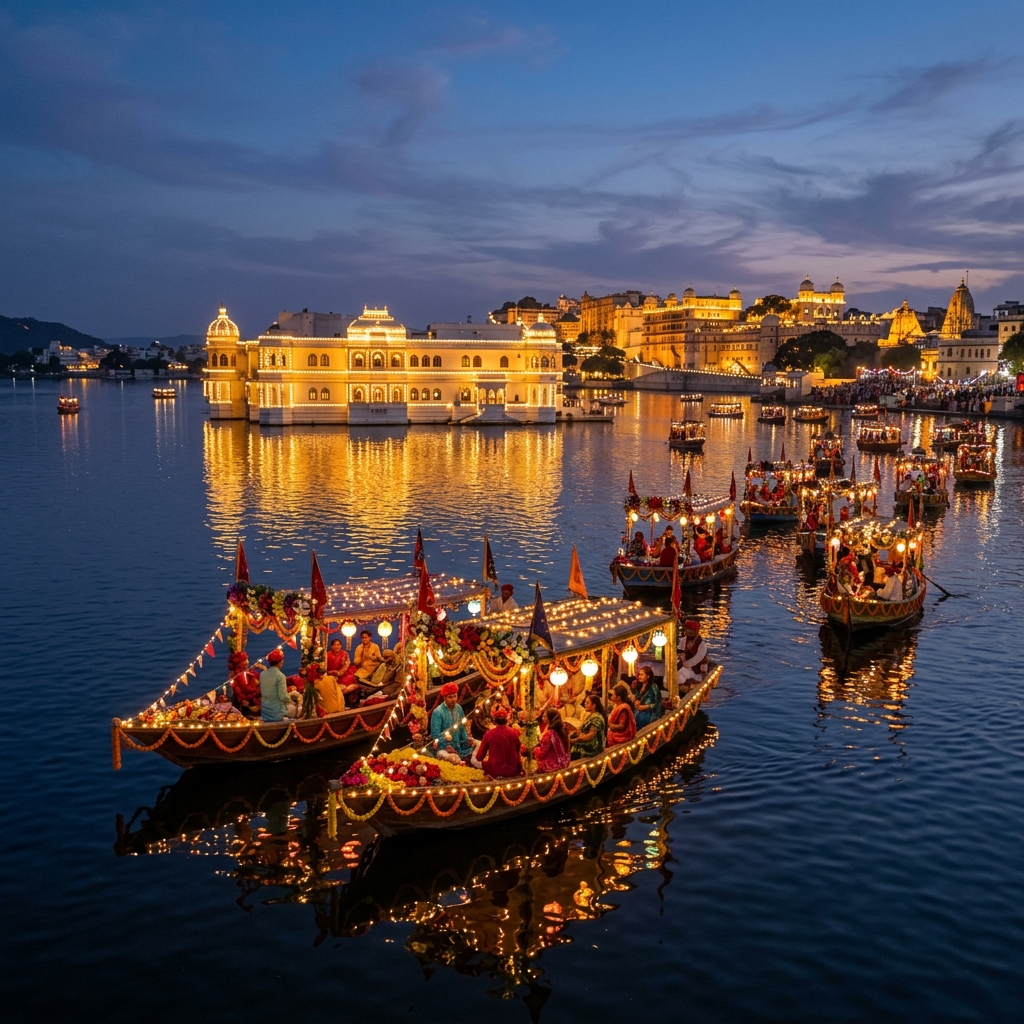
Chittorgarh is usually a stop, not a destination. Guests drive in from Udaipur, walk the fort for three hours, and leave before lunch. We understand why. But once a year the fort fills with devotional music for Meera Mahotsav, and that's when Chittorgarh deserves a night.
This isn't a festival of camels or fireworks. It's quiet, sung and sincere. Below is what we actually tell guests who ask us about it, in roughly the order they ask.
1. Who was Meera, and why Chittorgarh?
Meera (Meerabai) was a 16th-century Rajput princess and poet whose songs to Krishna are still sung across India. She married into the royal family of Mewar, whose capital was Chittorgarh, and she refused to give up her devotion to live the life expected of a royal widow. The family disapproved. The stories of their attempts to stop her, and her eventual departure for Vrindavan and Dwarka, are known to almost every Indian schoolchild.
Inside the fort there's a temple associated with her, next to the larger Kumbha Shyam temple. That's the emotional centre of the festival.
2. When is Meera Mahotsav 2026?
Traditionally the festival is tied to Sharad Purnima, the autumn full moon, which is celebrated as Meera's birth anniversary. In 2026 Sharad Purnima falls on 25 or 26 October, depending on the local calendar, and some listings already put the festival on those two days. We'd treat that as likely rather than certain.
Here's why: the dates have moved before. The 2024 edition, for example, was held in late December. Rajasthan Tourism and the district administration confirm the schedule a few weeks ahead, and we check with them before booking anything non-refundable. If you're flexible by a few days, you'll be fine.
3. What actually happens at Meera Mahotsav?
Mostly music. Evening bhajan sessions, classical and semi-classical singers, dance performances based on Meera's life, and recitations of her poetry. There are usually programmes both inside the fort and in the town, plus a procession and religious observances at the temple.
Don't expect English commentary. The songs are in old Rajasthani and Hindi, and the audience is largely local and devout. You'll see older women mouthing every word. That's the atmosphere you come for. If you want to understand what's being sung, a guide who can translate a verse or two during the breaks changes the whole evening.
4. Is it worth planning a trip around?
Honestly, it depends on you. If you like devotional music, or you've been to Rajasthan before and want something that isn't on every itinerary, yes. If you're on your first trip and have ten days, we'd rather you saw Chittorgarh on a good route and caught the festival only if the dates happen to line up.
The good news: late October is a fine time to be here anyway. Days are warm (around 30°C), mornings are fresh, and the monsoon green hasn't fully faded. It's also the run-up to Diwali, which in 2026 falls on 8 November, so towns are already decorating. Our Navratri and Dussehra 2026 guide covers the festivals just before this one.
5. How long should I spend in Chittorgarh?
One night is right for most people. Arrive by early afternoon, see the main fort sights before the light goes, attend the evening programme, and come back up at sunrise when the ramparts are empty.
The fort is enormous (it's one of the largest in India, and part of the UNESCO-listed Hill Forts of Rajasthan), so you'll drive between sights rather than walk the whole thing. The approach road climbs through a series of gates, ending at Ram Pol. Things we'd prioritise:
- Vijay Stambh, the Tower of Victory built by Rana Kumbha, covered in carved figures. You can sometimes climb it; the stairs are tight and dark.
- Kirti Stambh, the older, slimmer Jain tower nearby.
- Meera and Kumbha Shyam temples, obviously, more so this week.
- Gaumukh reservoir, a spring-fed tank on the cliff edge. Cool and green even when the rest of the fort is baking.
- Padmini's Palace, famous for the legend more than the building. Short stop.
- Rana Kumbha's Palace, ruined but atmospheric, especially late in the day.
Foreign visitors pay a separate ASI entry fee, which has been in the range of a few hundred rupees; check the current rate on the day, as it changes. Parking attendants and self-appointed guides wait at the main points. A polite "no, thank you" is enough.
6. Where should we stay?
Chittorgarh's hotels are functional rather than charming. There are a handful of decent mid-range properties in town and a couple of heritage stays in the countryside within 30 to 45 minutes. During the festival nights, rooms go faster than you'd expect for a town this size, because Indian pilgrims book early.
A budget guide: roughly INR 3,500 to 9,000 (about EUR 35 to 95) for a clean, comfortable double. Some guests prefer to stay in Udaipur and do Chittorgarh as a long day with the evening programme, then drive back late. It works, but that's a 2 to 2.5 hour drive each way on the highway after dark, and we'd rather you slept in Chittorgarh.
7. How does Chittorgarh fit into a Rajasthan route?
It sits on the road between Jaipur or Bundi and Udaipur, which makes it easy. From Jaipur it's around 5 hours. From Bundi, about 3. From Udaipur, 2 to 2.5.
Our favourite combination is Bundi, then Chittorgarh, then Udaipur. If your dates allow it in November instead, see our Bundi Utsav guide. From Udaipur it's a short hop to the Jain temples at Ranakpur, which pairs well with the devotional mood of Chittorgarh. Once you're in Udaipur, our Udaipur page has the rest.
If you'd like a ready-made route, the 15-night Classic Rajasthan tour passes through this part of Mewar and can be adjusted around the festival night.
8. Anything we should be careful about?
A few things. The fort gets slippery on polished stone after rain, and there's little shade at midday. Evening programmes can run late, and the fort road is dark, so let your driver handle it rather than taking an auto. Temples require shoes off, and at festival time the shoe stands get chaotic; keep a pair of cheap sandals for this. Finally, this is a religious event for most people in the audience. Dress modestly and keep phones on silent during the singing.
FAQ
Is Meera Mahotsav open to foreign visitors?
Yes. The public programmes we know of are open to everyone. Be respectful, arrive early for a seat, and don't expect reserved seating unless it's announced.
Do I need tickets?
The cultural programmes are generally free. You'll still pay the normal fort entry fee to get into Chittorgarh Fort during opening hours.
Is Chittorgarh a good day trip from Udaipur?
For the fort alone, yes. For the festival, we'd stay the night, because the best sessions are in the evening.
What's the weather like in late October?
Warm by day, pleasant at night. Carry a light layer for the fort at sunrise and sunscreen for midday.
Want Meera Mahotsav on your Rajasthan route? Send us your travel window through our enquiry form. We'll confirm the festival dates as soon as they're announced and plan the drive, the hotel and a guide who can explain what's being sung.