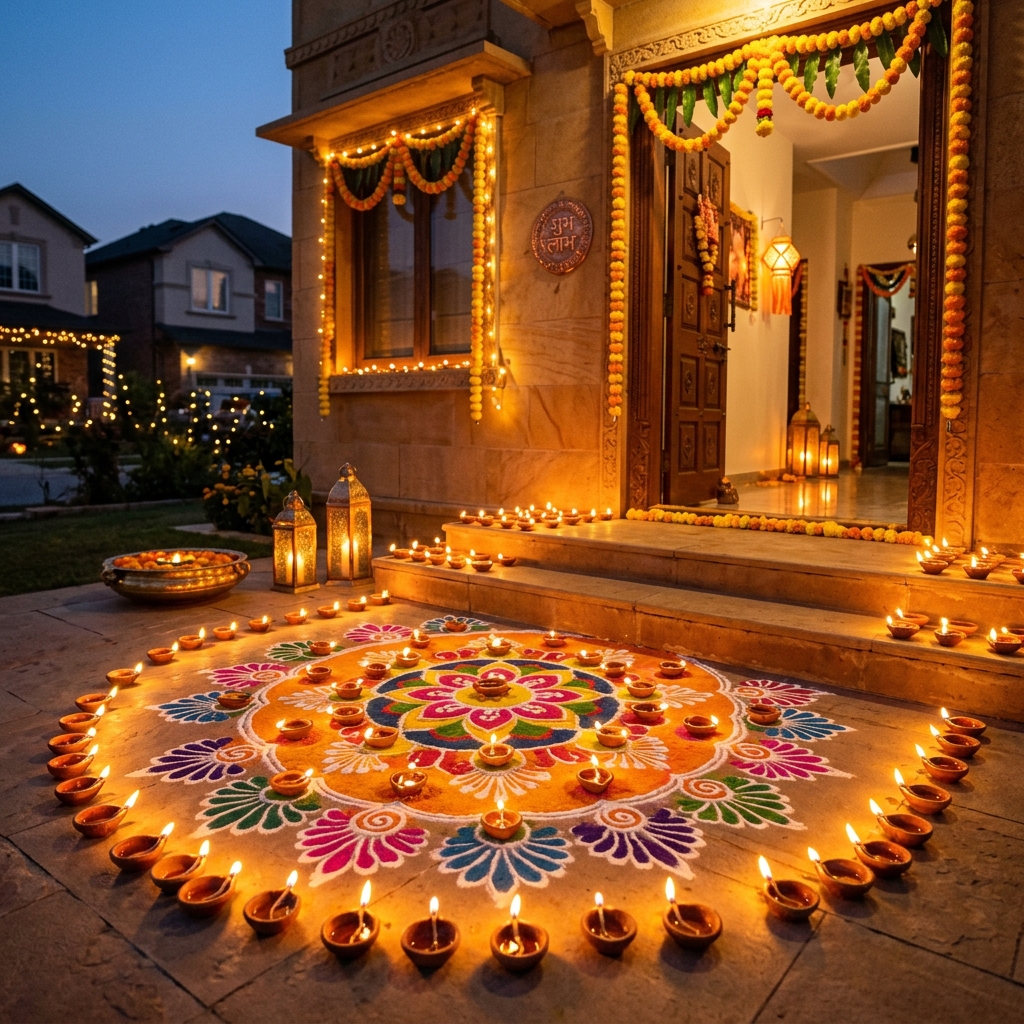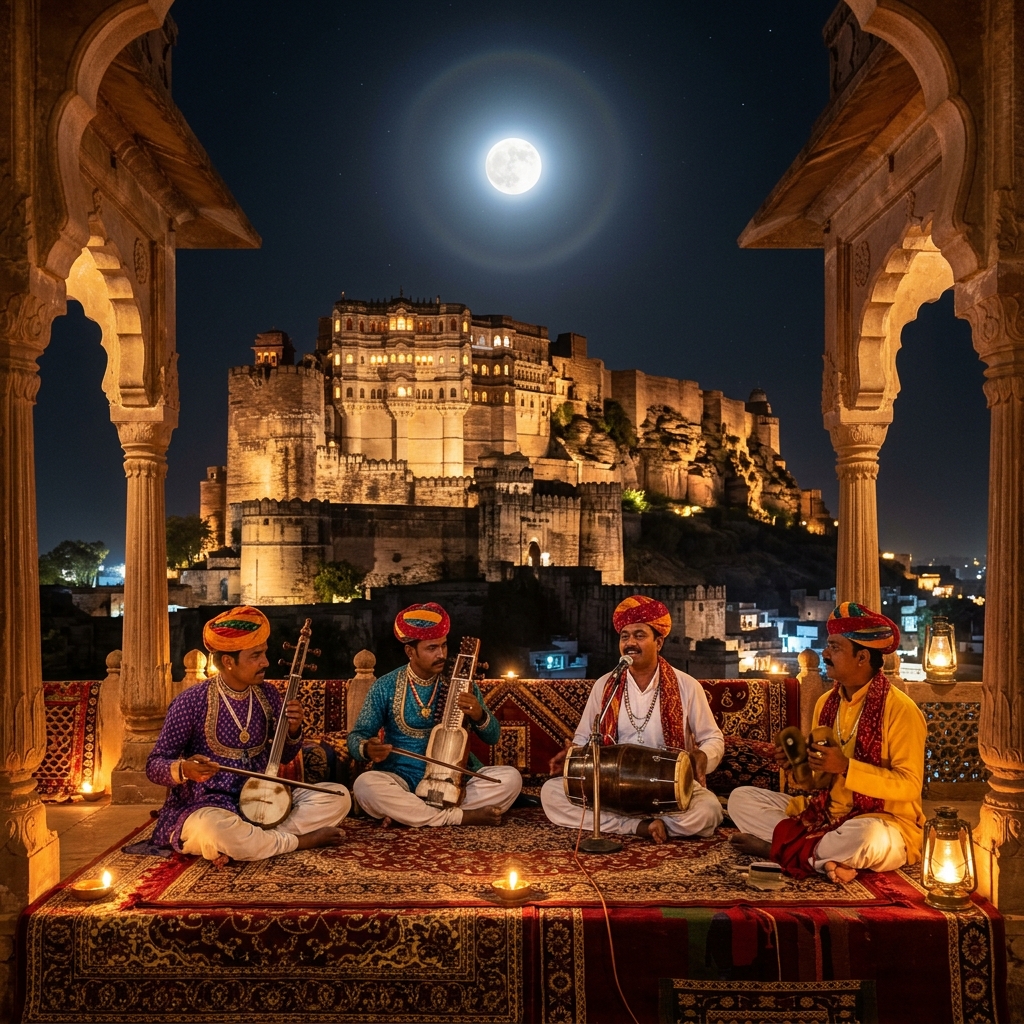
Autumn is when Rajasthan stops being a place you look at and becomes a place that is happening around you. Navratri runs for nine nights, Dussehra closes it, and three weeks later Diwali arrives. For a visitor it is the best and the most complicated time of year to be here, and it pays to know which of those things you are walking into.
The 2026 dates
- Navratri — Sunday 11 October to Monday 19 October 2026
- Dussehra (Vijayadashami) — Tuesday 20 October 2026
- Diwali — Sunday 8 November 2026, with the five-day festival running 6 to 10 November
Those three weeks between Dussehra and Diwali are, in our experience, the single best window to travel in North India. The weather has turned, the monsoon has cleared the air, and the whole state is between two celebrations.
What Navratri actually is
Nine nights dedicated to the goddess Durga in her nine forms, ending on the tenth day with Dussehra. That is the short version. What it looks like on the ground is families fasting, temples busy from early morning, markets staying open late, and music every evening.
The dancing — garba and dandiya — is more associated with Gujarat, but it has spread across Rajasthan and you will find it in hotel courtyards, community grounds and private gatherings in every city we take guests to. Dandiya is danced with two short sticks, in pairs, in a circle that keeps rotating. It looks impossibly complicated and takes about ten minutes to learn badly, which is the correct way for a visitor to learn it.
What a visitor actually sees, city by city
Jodhpur and Udaipur
Both cities do Navratri well, and both are small enough that you stumble into it rather than having to find it. Evening is when it happens — nothing much before eight, and it runs late.
Jaipur
Ramlila performances run through the nine nights: the Ramayana staged in episodes, outdoors, building night after night towards the moment Rama defeats Ravana. It is performed in Hindi and you will not follow the words. Go anyway — the audience tells you the story, because they know exactly which moment is coming.
Kota
Kota holds the largest Dussehra mela in Rajasthan, a fair that runs for days around the festival itself. It is a genuine local event rather than anything arranged for visitors, and it is the best of the lot if your dates line up and you do not mind crowds.
Dussehra: the evening of the twentieth
On Dussehra, effigies of Ravana — often ten-headed, frequently enormous, always packed with fireworks — are burned in open grounds at dusk. The crowd builds for an hour beforehand, there is usually a Ram Lila performance leading up to it, and then the thing goes up in a few spectacular minutes.
Practical advice from having taken a lot of guests to these: arrive early for somewhere to stand, stay well back because burning fireworks scatter, and agree with your driver where the car will be afterwards. Several thousand people leave at once and phone signal disappears in the crush.
What it means for your booking
- Hotels. October is high season already; the festival weeks compress it further. For 2026 dates we would be holding rooms by July.
- Domestic travel. Indians travel to family for these festivals. Trains and flights around 19–21 October and again around 6–10 November fill early and get expensive.
- Closures. Dussehra and Diwali are public holidays. Monuments largely stay open; banks, government offices and many shops do not. Markets in the days before Diwali are the busiest of the year.
- Drivers and guides. They have families too. We plan around it, but a driver who has been with you a week may hand over for two days.
Eating during Navratri
This catches visitors out more than anything else about the festival. Many people fast for all nine nights, and fasting here does not mean going without food — it means eating differently. No onion, no garlic, often no wheat, and in a lot of kitchens no meat at all for the duration.
What that means for you, practically:
- Restaurants run a vrat or fasting menu alongside the usual one. Buckwheat and water-chestnut flours replace wheat, and rock salt replaces table salt. It is worth ordering deliberately rather than by accident — sabudana khichdi and kuttu puri are genuinely good.
- Some restaurants go vegetarian for the nine days even if they normally are not, and a few hotel kitchens stop serving meat. If that matters to your group, tell us and we will book around it.
- Street food carries on as normal throughout, and the sweet shops are at their best.
Being a guest at someone else's festival
A few things worth knowing, none of them complicated:
- Cover shoulders and knees at temples, and take your shoes off. Socks are fine and the stone gets hot.
- Ask before photographing people, particularly women dancing and families at prayer. Almost everyone says yes; the asking is the point.
- Many people fast during Navratri. If a driver or guide declines lunch, that is why, and it is not an invitation to discuss it.
- If you are invited to a dandiya evening, go. Borrow the sticks. Being bad at it in public is entirely normal and improves the evening for everyone.
Common questions
Is Navratri a good time to visit Rajasthan?
Yes, with the caveat that you are travelling in peak season during a festival. You get the state at its most alive, and you pay more for hotels and book earlier. If you want quiet forts and empty palaces, come in February instead.
Can I join in, or is it only for Hindus?
You can join in. Garba and dandiya evenings are social occasions and visitors are welcomed into them. Temple rituals are a different matter — watch respectfully rather than participating unless you are invited to.
Is it noisy?
Very. Music runs late through all nine nights, and Dussehra and Diwali bring fireworks. If you are a light sleeper, ask us for a room facing away from the street; we do this routinely for guests travelling in October and November.
How does it differ from Diwali?
Navratri and Dussehra are public and outdoors — dancing, performances, crowds in open grounds. Diwali is domestic: lamps, families, homes lit up, sweets exchanged. One is a festival you watch, the other is a festival you are invited into. We wrote about the second in our guide to Diwali in Rajasthan.
What about the pollution?
Firework smoke around Diwali is real, and Delhi is worse than Rajasthan for it. If anyone in your group has asthma, we would plan to be in Udaipur or the desert rather than a big city for those two days.
Planning around the festivals
These dates shape an itinerary more than most people expect — where you are on the twentieth of October matters. We build routes around them every year, and you can see the range on our Rajasthan tours page, with the month-by-month picture in our guide to the best time to visit Rajasthan. Tell us your dates and we will tell you honestly what you will be walking into — send us your plans and you will have a day-by-day itinerary and a price within 24 hours, free and with no obligation.